Vinetaro Drops Official Website › Blog › Does Vinetaro Drops Really Work?
Does Vinetaro Drops Really Work? What The Evidence Can And Cannot Say
Short answer first: nobody can say yet, and anyone who tells you otherwise is guessing. The long answer is more useful than it sounds.
Quick answer
Nobody can honestly say yet. No study has tested this bottle, and its label names no ingredient, so no published result can be tied to it. The three claims describe support for circulation, energy and heart health, not treatment. You can run a fair test of your own inside the 60-day window.
Want the price and the terms on one screen?
The checkout shows today's price for each pack, and the 60-day window is stated before you pay.
Price shown at the seller’s checkout · 60-day money-back guarantee
See today’s price and guaranteeWe earn a retail margin on orders placed through this button. Lot VIN-26/GE-4119 · 2 fl oz (60 ml) a bottle.
- No published study tested Vinetaro Drops. Every study cited on this site tested one ingredient at a stated dose.
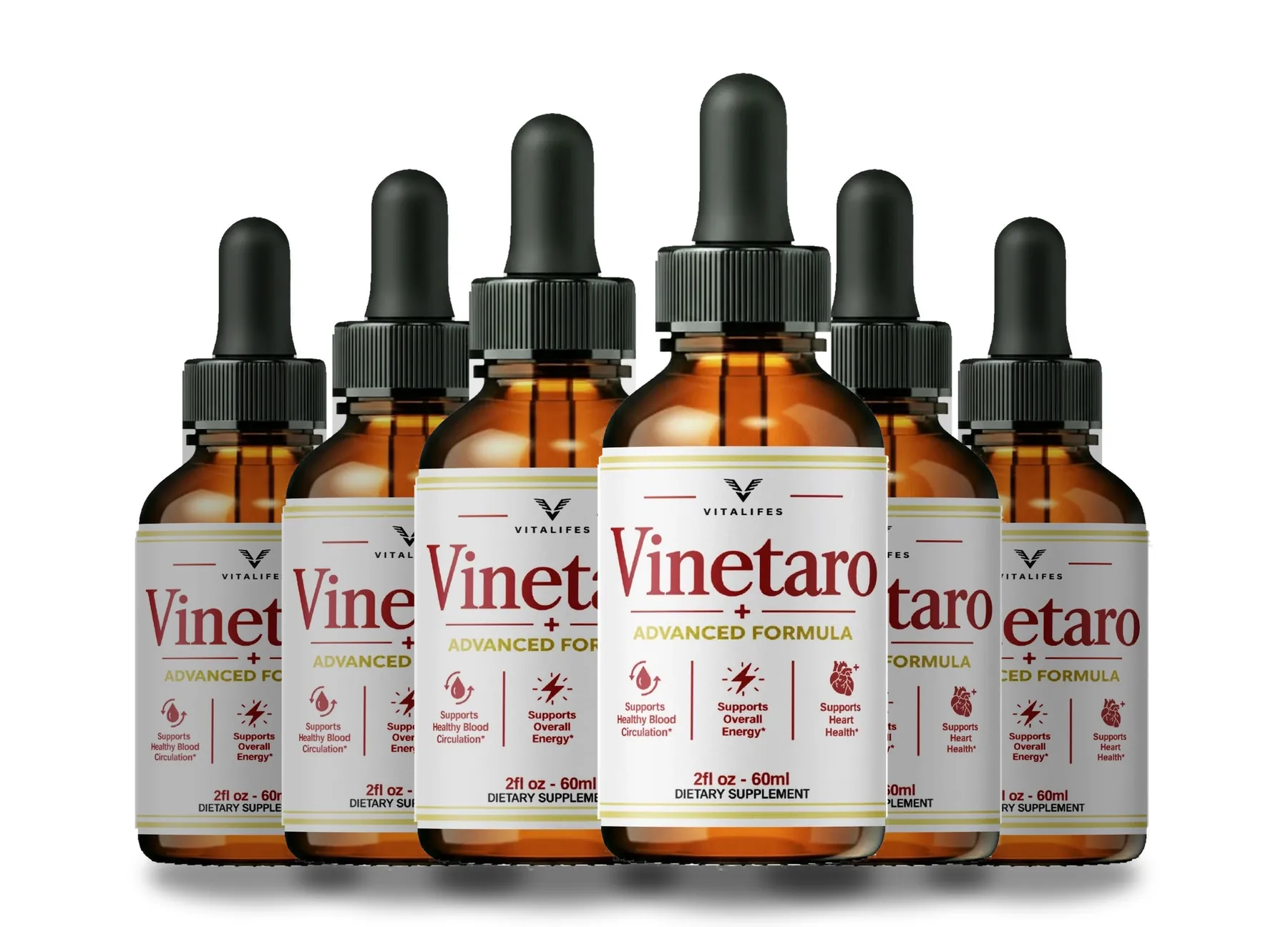
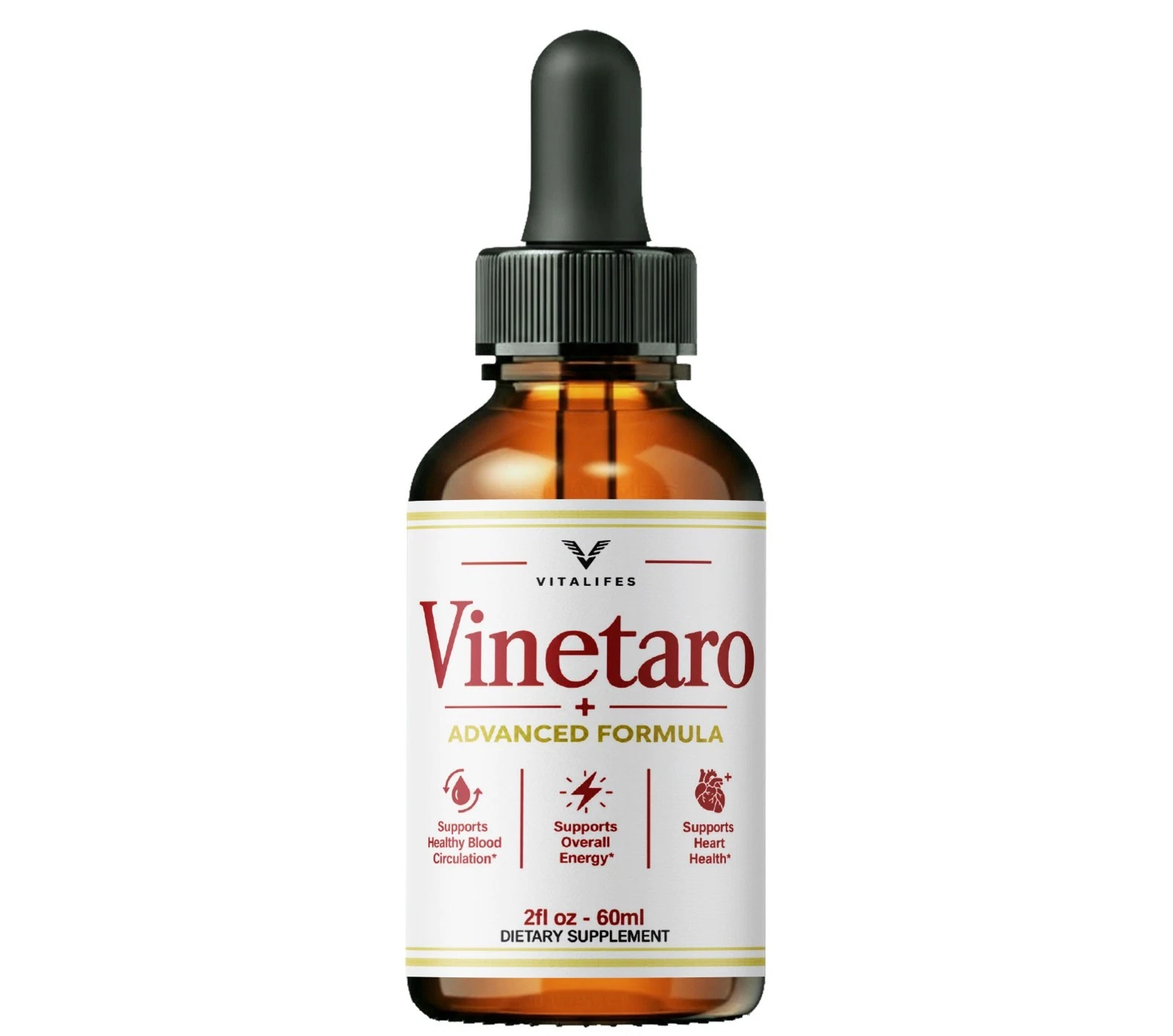
- The label claims three things: supports healthy blood circulation, supports overall energy and supports heart health.
- The bottle names no ingredient, so the route a claim would take cannot be named for it.
- The direction is two drops after a meal. A drop is roughly 0.05 ml, so a dose is about 0.1 ml.
- The seller’s own summary mentions a usual wait of 3–4 weeks.
- The 60-day return window leaves room for a proper personal test.
What would working even mean for this product?
Start with the words on the bottle. Each claim begins with “supports”, and each carries the supplement asterisk. Wording like that is allowed for normal body functions. Wording that says a product treats, cures or prevents disease is not.
So “working” here is a modest idea. Think warmer hands more often, legs that feel a little lighter by evening, an afternoon that dips less. These are small and slow, and nearly impossible to notice without a written baseline. A shift in a clinic measurement would count as a treatment result, and the bottle makes no such claim.
Has any study tested Vinetaro Drops?
No. The studies cited across this site each tested a single ingredient at a stated dose. None tested this finished liquid. The bottle names no ingredient, so no study can even be matched to it.
What we can do is set out the route each claim would have to take. This table shows it.
| Label claim | Route it would need | What is published for this bottle |
|---|---|---|
| Supports healthy blood circulation | Relaxing the lining of blood vessels so they widen | Nothing. No ingredient is named. |
| Supports overall energy | Either a stimulant effect or help moving fuel inside cells | Nothing. No ingredient is named. |
| Supports heart health | In trials this is usually measured as blood pressure | Nothing. No ingredient is named. |
How would Vinetaro Drops work, if it works at all?
Three routes exist in the research on the ingredients other sellers attach to this name. We describe them so you can judge the gap. None is confirmed for this bottle.
The vessel wall
The inner lining of blood vessels releases nitric oxide, which relaxes the vessel muscle so the vessel widens. L-arginine is the raw material the body turns into nitric oxide. A 2009 pooled analysis of short-term oral arginine found improved flow-mediated dilation, which is a measure of how much an artery widens after a brief squeeze. Grape seed extract has trial data too, from a different direction.
Energy
Two routes account for most products sold on energy. One is stimulation, from caffeine or caffeine-bearing plants such as guarana or green tea. The other is fuel handling inside cells, where L-carnitine is one named example.
The heart
Trials on heart-health ingredients tend to measure blood pressure, because it can be measured in a few weeks. That is why the published numbers on this page are blood-pressure numbers. They describe trial groups, not what one person’s cuff will read.
Why does the size of a drop matter?
A drop is roughly 0.05 ml, so the two-drop direction is about 0.1 ml of liquid. The largest amount any seller prints under this name is a 200 mg blend. Now set that beside the amounts behind the published results.
| Ingredient (named by other sellers) | Amount behind the published result | Compared with a 200 mg blend |
|---|---|---|
| L-arginine | Blood pressure responded only from 4 g a day upward | 20 times larger |
| L-carnitine | 1 to 4 g a day, clearest effect near 2 g | 5 to 20 times larger |
| Maca root | 3.3 g a day for six weeks | 16.5 times larger |
| Grape seed extract | Across sixteen randomised trials, the pooled systolic fall was 6.08 mmHg | Dose not stated here |
None of these ingredients is confirmed for this bottle. The comparison shows scale only.
A tenth of a millilitre cannot carry grams of anything. If a dropper product has an effect, either the ingredient is far more potent than these, or the effect comes from something else. A stimulant is the usual suspect, and a stimulant is exactly what a bottle with no ingredient line cannot warn a caffeine-sensitive buyer about.
Does a liquid work faster than a capsule?
Liquids are often sold on absorption. For a few compounds held under the tongue, the claim is real. For most plant extracts it matters little, because the molecules are too big or too polar to cross in the seconds they spend there.
The label settles it anyway, because it says to swallow two drops after food. Swallowed that way, a liquid travels the same road as a capsule. What the dropper really offers is a small dose, no capsule shell and a routine some people find easier to stick to. That is a perk, not extra power.
How can you run a fair test yourself?
Sixty days is enough time for a proper trial. Here is a plain method.
- Before the first drop, score three things out of ten each evening for two weeks: how warm your hands were, how heavy your legs felt, how the middle of your afternoon went.
- Then take two drops with one fixed meal daily and change nothing else: no new coffee habit, no new supplement.
- Keep scoring every evening, including the bad days. Do not re-read the old notes.
- Around day 50, compare the average of your first fourteen days with the average of your last fourteen.
- A steady gap on two of the three measures is worth writing down. One point on one measure is noise.
- If the result is no, phone the order desk before day 60.
What does not count as evidence?
- A good feeling on the first evening. That is usually expectation.
- One good afternoon in week three.
- A five-star roster that repeats three sentences.
- A trial on a named ingredient at a dose this bottle may not contain.
- Buying a bigger pack. It changes the arithmetic, not the answer.
Individual results vary. Food, sleep, exercise and any other supplement you take still count.
Which sources sit behind this page?
These sources are named on this site. Each tested one ingredient at a stated dose, and none tested Vinetaro Drops.
- 2009 meta-analysis of short-term oral L-arginine
- 2022 dose-response meta-analysis of L-arginine
- 2016 meta-analysis of grape seed extract and blood pressure
- 2024 dose-response meta-analysis of L-carnitine
- A maca pilot trial in postmenopausal women
- NCCIH guidance on using dietary supplements wisely
Frequently asked questions
Does Vinetaro Drops really work?
Nobody can say. No study has tested this bottle, and its label names no ingredient. The distributor's summary describes a slow start, with a common wait of 3-4 weeks.
How does Vinetaro Drops work?
The label claims support for circulation, energy and heart health but names nothing that would deliver them. Other sellers attach ingredients to the name, and trials on those ingredients used amounts measured in grams.
Is a liquid faster than a capsule?
Not by much. Swallowed after a meal, a liquid takes much the same route as a capsule. The dropper is a convenience: a small dose to swallow and no capsule shell.
Is Vinetaro Drops a treatment for a heart or circulation condition?
No. It is a supplement, and supplements are not drugs. It has no FDA approval and is not meant to diagnose, treat, cure or prevent any disease.
What can I expect from week one?
Probably nothing, and that is normal. The seller's own figures suggest 3-4 weeks, and the roster it publishes has no comment before day 14. Week one mostly tests whether the routine sticks.
How do I know if it worked for me?
Score three things out of ten each evening for two weeks before you start, keep scoring after, and compare the first and last fortnights around day 50. A steady gap on two of three measures is worth noting.
Our view
The honest answer to “does it work?” is that the question has no published answer. The label makes three modest claims, names no ingredient and gives no amount, so there is nothing to test the claims against.
We think the useful move is to turn a vague hope into a small experiment. Write the baseline, take two drops after a meal, and let your own notes decide inside the 60 days. That costs little and tells you more than any page can.
If you have chest pain, a swollen or painful leg, or leg pain when you walk, see a doctor. A supplement is not the first step for those. On prescription medicine? Mention this bottle to a doctor or pharmacist before you begin.
Ready to look at the checkout?
Read the return terms there first, and keep the order email, because the order desk needs the order ID.
Price shown at the seller’s checkout · 60-day money-back guarantee
See today’s price and guaranteeWe earn a retail margin on orders placed through this button. Lot VIN-26/GE-4119 · 2 fl oz (60 ml) a bottle.
Last updated