Vinetaro Drops Official Website › How it works
How it worksHow Does Vinetaro Drops Work?
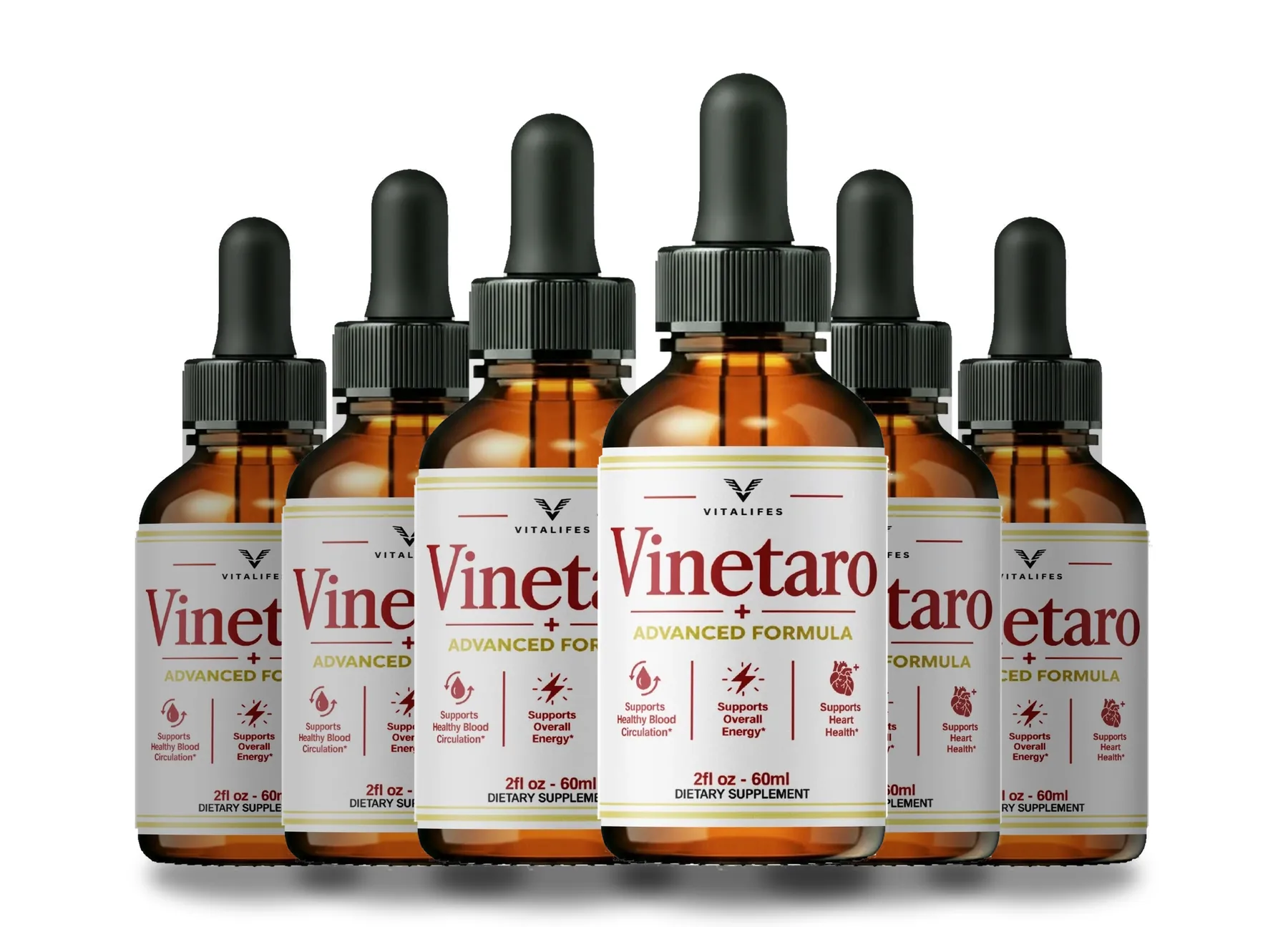
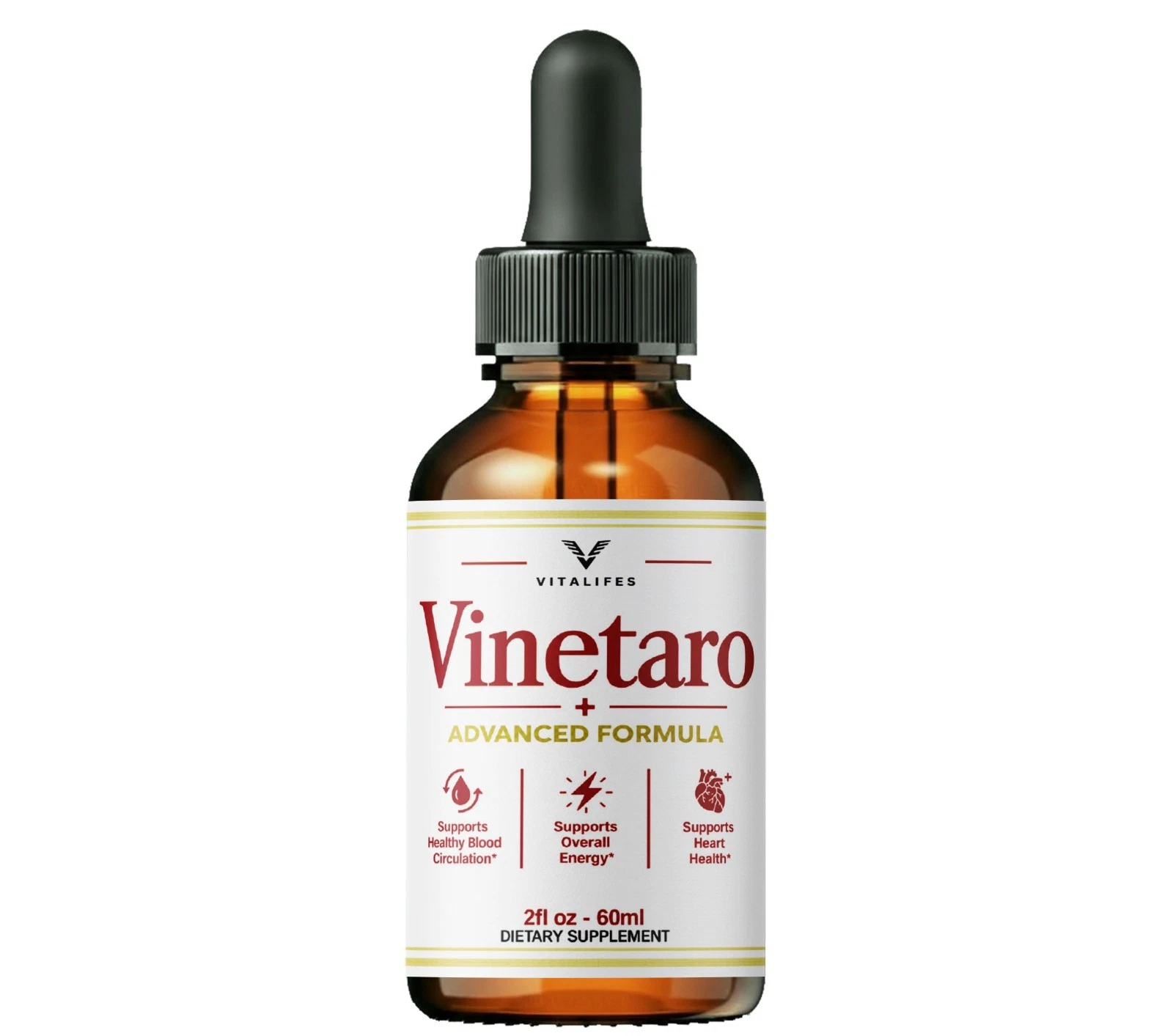
Vinetaro Drops carries three starred phrases: support for healthy blood circulation, overall energy and heart health.
The bottle names nothing that would deliver them, so this page works the other way round. It takes each claim, sets out the mechanism it would have to use, and prints the amount the published human trials used for the ingredients other sellers attach to this name.
Three claims, three routes, and the amount behind each published result.
What a Vinetaro Drops claim is, in the words the law uses
Three starred phrases, and the legal weight each one carries.
Three phrases are starred on the front of this bottle: supports healthy blood circulation, supports overall energy, supports heart health. Each is a structure or function statement, which is the category of claim a supplement is allowed to make without an approval process behind it.
That category has a shape worth knowing. A structure or function claim says a product supports a normal body process. It never says the product treats a condition, restores a measurement to a range, or replaces anything a clinic gives you. The asterisk beside each phrase on the artwork points at the same sentence this website carries in its footer.
So the honest way to read the three phrases is as a description of the territory the seller is working in, not as three promises. The rest of this page takes each one and asks a narrower question: if something in the bottle were going to move that process, what would the route be?
- Supports healthy blood circulation.
- Supports overall energy.
- Supports heart health.
- Five further phrases appear on a separate marketing square shipped with the product. Those are listing artwork rather than label declarations, and the benefits page separates the two.
The route a Vinetaro circulation claim would have to take
Start with the measurement, then work back to what might move it.
Circulation in an adult is mostly a question of what the inner lining of the blood vessels is doing. That lining, the endothelium, releases nitric oxide, and nitric oxide relaxes the muscle in the vessel wall so the vessel widens. Researchers measure this by clamping an arm, releasing it, and tracking how much the artery widens in response, a figure called flow-mediated dilation.
Two ingredient families attributed to this name have data on that measurement. L-arginine is the raw material the body converts into nitric oxide, and a 2009 pooled analysis of short-term oral arginine found it improved flow-mediated dilation. A 2018 meta-analysis in people with cardiovascular or metabolic disorders reached a similar conclusion on endothelial markers.
Grape seed extract works from a different direction, as a polyphenol load rather than a precursor. A 2022 meta-analysis with dose and duration analysis examined its effect on flow-mediated dilation, blood pressure and heart rate across controlled trials.
| Ingredient family | The measurement it moved | The amount that moved it |
|---|---|---|
| L-arginine | flow-mediated dilation; endothelial markers | systolic pressure responded only at 4 g a day and above |
| Grape seed extract | flow-mediated dilation; systolic pressure | pooled across sixteen randomised trials, systolic fell 6.08 mmHg |
| Ginkgo biloba | walking distance in intermittent claudication | the standardised extract EGb 761, at the doses those trials fixed on |
Set beside a 200 milligram blend, the arginine row is the instructive one: four grams is twenty times the entire blend.
Ginkgo is the third name worth raising, because it is the one whose photograph appears on the seller's own panel. The Cochrane review of ginkgo for claudication looked at walking distance in people whose legs hurt when they walked, and the EGb 761 trial is the best-known individual study in that set. The National Center for Complementary and Integrative Health keeps a plain-language page on the plant that is worth ten minutes.
The route a Vinetaro energy claim would have to take
Two routes, one of them fast and one of them slow.
Energy is the vaguest of the three phrases and the easiest to deliver by accident. Two routes account for nearly everything sold under the word. The first is stimulation: caffeine and caffeine-bearing plants change how alert somebody feels within the hour. The second is metabolic: compounds involved in moving fat into the mitochondria, where it is burned.
Three of the four circulating lists carry a plant from the first group. Guarana is one of the most caffeine-dense seeds in commerce, and a 2024 trial compared an acute dose against a low dose of caffeine on mental performance. Green tea brings catechins and, unless it is decaffeinated, caffeine with them; a 2013 meta-analysis looked at what the catechins did to glycaemic markers with and without it.
The second route is the carnitine shuttle. A 2024 dose-response meta-analysis tracked effects at one to four grams a day, with the clearest signal near two grams. Beta-alanine belongs to a related conversation about buffering rather than fuel, and the pooled trials ran at 3.2 to 6.4 grams a day for weeks at a time.
Two drops is roughly a tenth of a millilitre. Nothing measured in grams fits into that volume, whatever the formula. If an energy effect arrives from a dropper, the likeliest explanation is a stimulant, and a stimulant is the one thing a label with no ingredient line cannot warn a caffeine-sensitive buyer about.
The route a Vinetaro heart claim would have to take
Three amounts, all of them measured in grams.
A heart claim on a supplement almost always resolves into blood pressure, because that is the endpoint trials can measure in eight weeks. The literature attached to the names on the circulating lists follows that pattern exactly.
A 2022 dose-response meta-analysis of L-arginine found systolic pressure moved only at four grams a day and above. A 2016 analysis of sixteen randomised trials of grape seed extract reported a systolic fall of 6.08 millimetres of mercury. A pilot trial of maca in postmenopausal women used 3.3 grams a day for six weeks and reported a blood-pressure change alongside a mood one.
Read those three together and a pattern appears that is more useful than any single result. Every amount is measured in grams, and the largest blend any version of this product claims is a fifth of one gram in total. That gap is the honest answer to the question this page exists to ask.
A six-point systolic fall in a trial average is a population statistic. It does not forecast what one person's cuff will read, and nothing on this page suggests anybody should change a prescription. A cuff at home, used at the same time of day for a fortnight before and a fortnight after, will tell you far more than an average from a journal.
Honest critique: where the Vinetaro mechanism story stops
One section states the limits, and it is this one.
Everything above describes routes that exist in the literature. None of it describes this bottle, and the difference is the whole of the honest position.
No study on this page tested this product. Every citation is about an ingredient at a stated dose, and this bottle states neither ingredient nor dose. So the correct reading is that three plausible mechanisms exist in the category, and whether any of them is present in a 60 millilitre bottle taken two drops at a time is a question the artwork leaves open.
There is also a quieter limit. Even where a mechanism is real and the dose is right, the effect sizes in this field are modest and slow. The distributor's own summary puts the common wait at 3–4 weeks, which is consistent with a supplement and inconsistent with anything dramatic. A page promising a fast change would be arguing with its own seller's figures.
What the mechanism case has going for it
- Three named routes with real human trials behind them.
- A format, the dropper, that is easy to take consistently.
- A guarantee long enough to outlast the distributor's own stated wait.
- A seller whose review summary is unglamorous about week one.
What it is missing
- No published amount to set any mechanism against.
- A blend ceiling of 200 milligrams where the trials run in grams.
- Nothing here tested as a finished liquid.
- Four competing lists, so even the mechanism candidates are inferred.
What the Vinetaro dropper changes, and what it does not
Liquid absorption is a real phenomenon and a badly abused selling point.
Liquids get sold on absorption, and the claim is usually overstated. A drop held under the tongue can reach the bloodstream through the mucosa and skip the first pass through the liver, which for a handful of compounds matters a great deal. For most plant extracts it matters very little, because the molecules are too large or too polar to cross efficiently in the seconds they spend there.
The direction on this bottle settles it anyway: two drops after a meal. Taken after food, swallowed rather than held, a liquid follows the same path a capsule does. What the dropper genuinely buys is a smaller dose to swallow, no capsule shell, and a format that some people find easier to keep up.
The honest summary is that the format is a convenience rather than a mechanism. It is a good convenience. It is not a reason to expect more from the same quantity of the same plant.
Three things that must be true before Vinetaro does anything
Four conditions, in the order they have to be met.
Something has to be in it
An effect needs a cause. With no ingredient line, the first condition is the one nobody outside the manufacturer can check, and it is why this page is written as a set of routes rather than a claim.
It has to be there in quantity
Every amount on this page is measured in grams or hundreds of milligrams. Two drops carries about a tenth of a millilitre of liquid. Quantity is where most of this category fails, and it fails quietly.
It has to be taken long enough
Nothing in this field works in a week. The distributor's own figure is 3–4 weeks, and the guarantee runs 60 days, which is roughly double that. The timeline page sets out what to watch and when.
And it has to be the right target
Cold hands at a desk and heavy legs after a long day have several causes, and some of them are mechanical or postural rather than circulatory. A supplement cannot sort one from another, and a fortnight of notes before the first drop often can.
How Vinetaro Drops works: common questions
How does Vinetaro Drops work?
The bottle claims support for circulation, energy and heart health and names nothing that would deliver it. This page sets out the route each claim would have to take and the amount the published trials used, so a reader can judge the gap for themselves.
Does it work faster because it is a liquid?
Taken after a meal and swallowed, a liquid follows the same route a capsule does. Sublingual absorption is real for a small number of compounds and rarely for plant extracts. The dropper is a convenience and a good one.
Is there any trial on the finished product?
None has been published. Every study cited on this website tested a single ingredient at a stated dose, and each citation says so where it appears.
Which ingredient would be doing the circulation work?
On the evidence attached to the names other sellers use, arginine and grape seed extract have the most direct data on the vessel wall. Both were trialled at amounts far larger than a 200 milligram blend could hold.
What would a realistic effect feel like?
Small and cumulative. Warmer hands more often rather than always, legs that feel less heavy at the end of a long day, a flatter afternoon. Anything sudden is worth treating as a reason to stop and ask about, not a result.
Sources behind the Vinetaro Drops mechanism pages
Each study is about one ingredient at one dose, and none of them tested this liquid.
- Shiraseb F, Asbaghi O, Bagheri R, et al. Effect of l-arginine supplementation on blood pressure in adults: a systematic review and dose-response meta-analysis of randomized clinical trials. Adv Nutr. 2022;13(4):1226-1242. Systolic pressure moved only at doses of 4 g/day or more. PMID 34967840. https://pubmed.ncbi.nlm.nih.gov/34967840/
- Rodrigues-Krause J, Krause M, Rocha IMGD, et al. Association of l-arginine supplementation with markers of endothelial function in patients with cardiovascular or metabolic disorders: a systematic review and meta-analysis. Nutrients. 2018;11(1):15. PMID 30577559. https://pubmed.ncbi.nlm.nih.gov/30577559/
- Bai Y, Sun L, Yang T, et al. Increase in fasting vascular endothelial function after short-term oral L-arginine is effective when baseline flow-mediated dilation is low: a meta-analysis of randomized controlled trials. Am J Clin Nutr. 2009;89(1):77-84. PMID 19056561. https://pubmed.ncbi.nlm.nih.gov/19056561/
- Foshati S, Nouripour F, Sadeghi E, et al. The effect of grape (Vitis vinifera) seed extract supplementation on flow-mediated dilation, blood pressure, and heart rate: a systematic review and meta-analysis of controlled trials with duration- and dose-response analysis. Pharmacol Res. 2022;175:105905. PMID 34798267. https://pubmed.ncbi.nlm.nih.gov/34798267/
- Zhang H, Liu S, Li L, et al. The impact of grape seed extract treatment on blood pressure changes: a meta-analysis of 16 randomized controlled trials. Medicine (Baltimore). 2016;95(33):e4247. Systolic pressure fell by 6.08 mmHg. PMID 27537554. https://pubmed.ncbi.nlm.nih.gov/27537554/
- Nicolaï SP, Kruidenier LM, Bendermacher BL, et al. Ginkgo biloba for intermittent claudication. Cochrane Database Syst Rev. 2013;2013(6):CD006888. PMID 23744597. https://pubmed.ncbi.nlm.nih.gov/23744597/
- Peters H, Kieser M, Hölscher U. Demonstration of the efficacy of ginkgo biloba special extract EGb 761 on intermittent claudication — a placebo-controlled, double-blind multicenter trial. Vasa. 1998;27(2):106-10. Dosing: three film-coated tablets daily for 24 weeks; the abstract does not state the milligrams. PMID 9612115. https://pubmed.ncbi.nlm.nih.gov/9612115/
- Ginkgo. National Center for Complementary and Integrative Health, National Institutes of Health. https://www.nccih.nih.gov/health/ginkgo
- Talik TN, Penna EM, Hack BP, et al. Effects of acute guarana (Paullinia cupana) ingestion on mental performance and vagal modulation compared to a low dose of caffeine. Nutrients. 2024;16(12):1892. PMID 38931247. https://pubmed.ncbi.nlm.nih.gov/38931247/
- De Giuseppe R, Di Napoli I, Granata F, et al. Caffeine and blood pressure: a critical review perspective. Nutr Res Rev. 2019;32(2):169-175. PMID 30947761. https://pubmed.ncbi.nlm.nih.gov/30947761/
- Zheng XX, Xu YL, Li SH, et al. Effects of green tea catechins with or without caffeine on glycemic control in adults: a meta-analysis of randomized controlled trials. Am J Clin Nutr. 2013;97(4):750-62. Fasting glucose fell by 1.48 mg/dL. PMID 23426037. https://pubmed.ncbi.nlm.nih.gov/23426037/
- Mirrafiei A, Jayedi A, Shab-Bidar S. The effects of L-carnitine supplementation on weight loss, glycemic control, and cardiovascular risk factors in patients with type 2 diabetes: a systematic review and dose-response meta-analysis of randomized controlled trials. Clin Ther. 2024;46(5):404-410. Effects tracked doses of 1-4 g/day. PMID 38594107. https://pubmed.ncbi.nlm.nih.gov/38594107/
- Georgiou GD, Antoniou K, Antoniou S, et al. Effect of beta-alanine supplementation on maximal intensity exercise in trained young male individuals: a systematic review and meta-analysis. Int J Sport Nutr Exerc Metab. 2024;34(6):397-412. Doses: 3.2-6.4 g/day. PMID 39032921. https://pubmed.ncbi.nlm.nih.gov/39032921/
- Stojanovska L, Law C, Lai B, et al. Maca reduces blood pressure and depression, in a pilot study in postmenopausal women. Climacteric. 2015;18(1):69-78. Dose: 3.3 g/day for 6 weeks. PMID 24931003. https://pubmed.ncbi.nlm.nih.gov/24931003/
Order Vinetaro Drops with the mechanisms in front of you
Two drops a day after a meal, 2 fl oz (60 ml) in amber glass and 60 days from purchase, which is longer than the wait the seller's own summary quotes.
Price shown at the seller’s checkout · 60-day money-back guarantee
Order Vinetaro Drops On The Official Website2 drops daily after a meal · 2 fl oz (60 ml) a bottle · lot VIN-26/GE-4119