Vinetaro Drops Official Website › Choosing A Supplement
Choosing A SupplementChoosing A Circulation Supplement: Seven Checks
Turn the bottle over first. If there is no Supplement Facts panel, three of the remaining six checks cannot be run at all, and you have learned most of what you needed in four seconds.
The other six cover weights against names, whether the bottle and the sales page describe the same product, a consistent serving, a readable price, a stated return window and a traceable lot.
The scorecard, then Vinetaro Drops scored on it without adjustment. It clears three rows and fails three.
Why a checklist beats an ingredient you recognise
Seven questions about the bottle, not about the biochemistry.
Most people choose a supplement by scanning the front of the box for a name they have heard of. It is a reasonable instinct and it is the wrong tool, because the front of the box is the one surface that is entirely under marketing control.
A checklist works better for a dull reason: the seven things below are all either printed on the bottle or absent from it, and absence is as informative as presence. You are not being asked to judge whether an ingredient works. You are being asked whether the seller has given you enough to judge anything at all.
Run in order, the checks also fail fast. If there is no panel, checks two through four cannot be run, and you have learned what you needed in about four seconds.
This page is published by the desk that sells Vinetaro Drops, and it scores Vinetaro Drops. The scorecard is applied unchanged rather than bent, which is why the product loses three of the seven rows. A checklist written to produce a particular result would not be worth running on anything else, and running it on anything else is the point.
Seven checks to run on any circulation supplement
Seven rows, each answerable from the packaging or the listing alone.
| # | The check | What a pass looks like | Why it is on the list |
|---|---|---|---|
| 1 | Is there a Supplement Facts panel? | A panel on the back or side listing ingredients and amounts | Without one, nobody can screen for an allergen, a stimulant or an interaction. Every other check depends on this one |
| 2 | Is there a weight against every name? | A milligram or gram figure per row, not just a blend total | A blend total divided among many members can put every member below any dose ever studied, and the label will never say so |
| 3 | Does the bottle claim what the seller claims? | The printed claims and the sales page describe the same product | Where they diverge, the bottle is the thing that arrives in the box and the sales page is an advertisement |
| 4 | Is the serving consistent everywhere it appears? | One serving size, stated the same way on the label and the listing | Two different servings for one bottle means at least one of them is wrong, and every per-serving figure inherits the error |
| 5 | Is a price published before checkout? | A figure you can read without entering an email or a card | A price that only appears at the last step is a price you cannot compare |
| 6 | Is there a real return window with a stated length? | A day count, in writing, with a documented procedure | Money back with no number attached is a mood rather than a policy |
| 7 | Can a specific batch be traced? | A lot code on the bottle and a route to ask about it | It is how a complaint becomes a specific question instead of a general one |
Checks one to four are about information. Five to seven are about the seller. Both halves matter, and most bottles in this aisle are stronger on the second.
Vinetaro Drops scored against all seven checks
The same seven rows, answered from the artwork and the paperwork.
| # | The check | Result | The evidence for the score |
|---|---|---|---|
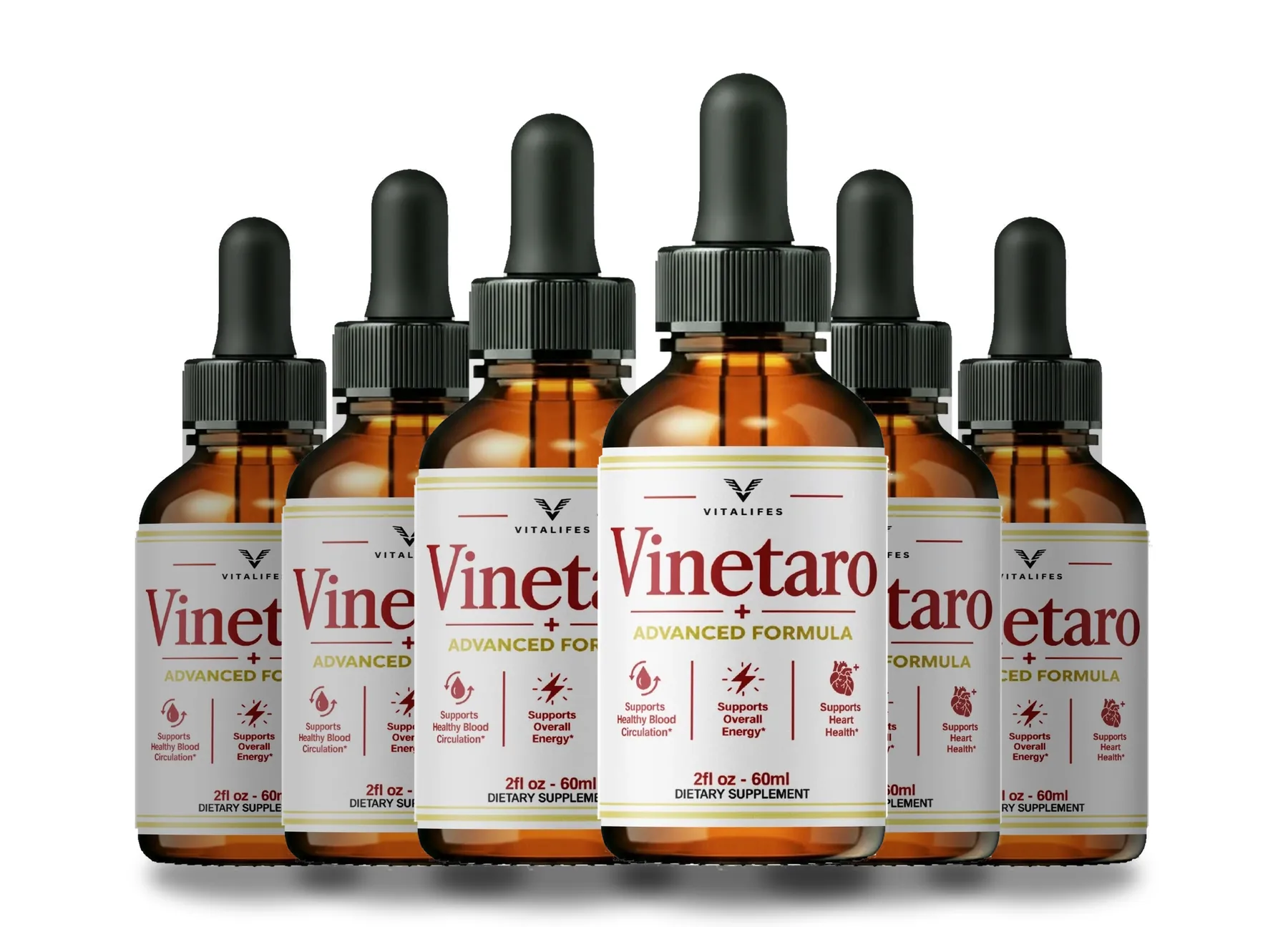
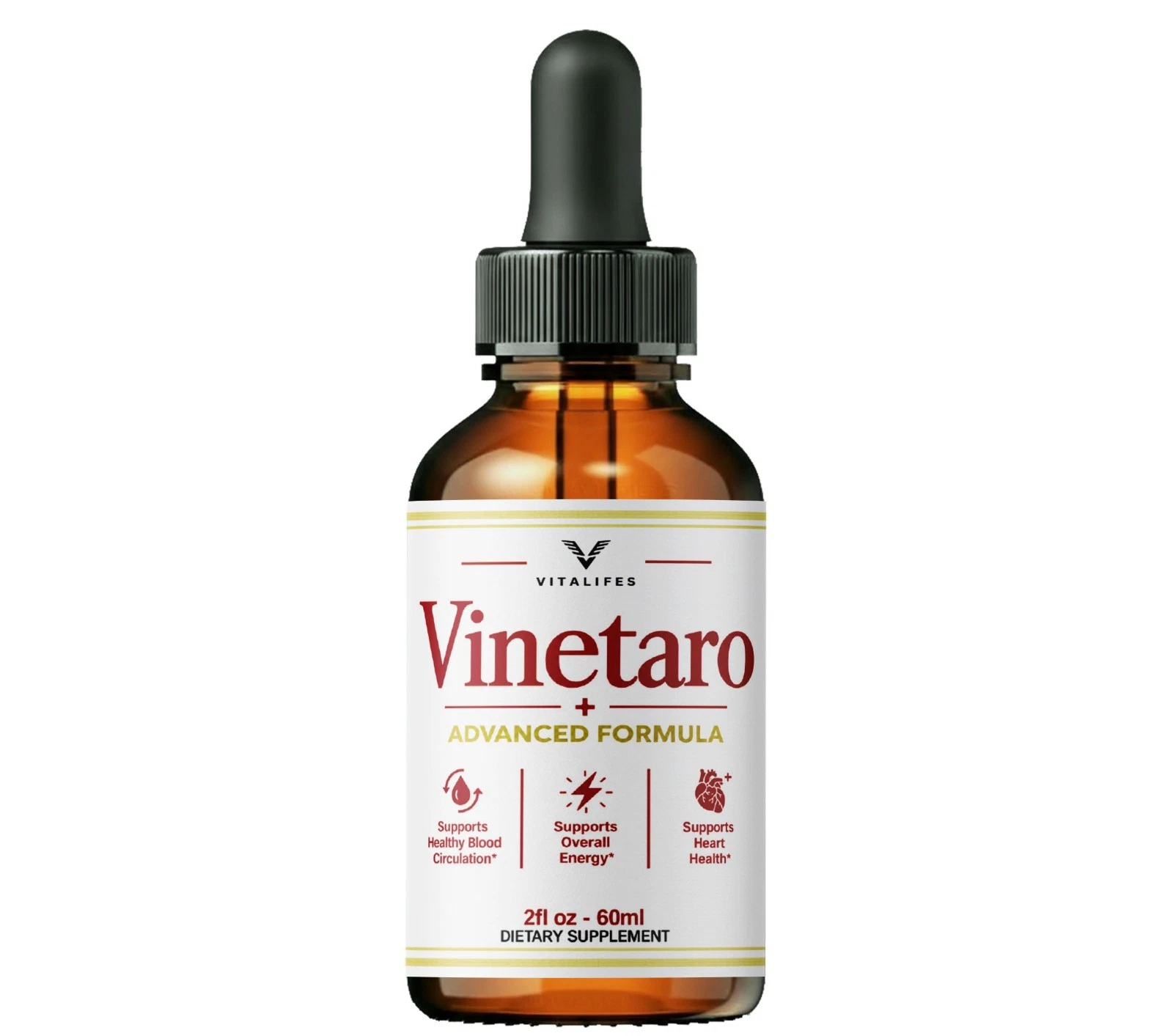
| 1 | Supplement Facts panel | Fail | Every image in the pack shows the same front face. There is no back-label shot, and the face carries a brand, a name, a modifier, three starred claims, a volume and the words dietary supplement |
| 2 | A weight against every name | Cannot be scored | This check requires a panel to run against. The four ingredient lists circulating under this name belong to other websites selling their own liquid |
| 3 | Bottle claim matches seller claim | Fail | The face claims healthy blood circulation, overall energy and heart health. The landing pages sell the product for blood sugar. The bottle says nothing about glucose |
| 4 | Consistent serving size | Fail | The label prints two drops daily after a meal. Other sellers under this name print 2 ml, one to two droppers, and 1 ml with sixty servings a bottle. Those sit about forty times apart |
| 5 | Price published before checkout | Partial | The listing this desk sells through answered 403 to every client tried on 19 September 2026, so no price is printed here. The pack panel says Price at checkout rather than inventing a figure |
| 6 | Stated return window | Pass | 60 days from the date of purchase, corroborated by three vendor pages independently, with a five-step procedure published on the refund page |
| 7 | Batch traceable | Pass | Lot VIN-26/GE-4119 and certificate reference VIN-4119-26-GE, with a route to ask about them on the batch-verify page. Filing references rather than laboratory proof, and named as such |
Three fails, one unscoreable, one partial and two passes. The scorecard was not adjusted after it was applied.
The three checks this bottle fails outright
Quarantined here, in full, rather than seeded through the page.
Taking them in the order they matter rather than the order they are numbered.
The serving conflict is the worst of the three, because it is the one that makes every other figure unusable. If a serving is two drops, a sixty-millilitre bottle lasts well over a year. If a serving is one millilitre, the same bottle lasts two months. If it is two millilitres, one month. Those are three different products wearing the same label, and any milligram figure quoted per serving means three different things depending on which one is true.
The missing panel is the most consequential for safety, for the reason set out in the check itself: an allergy list and a medicine list are screened against an ingredient panel, and with no ingredient named that screening cannot be completed by anybody, however carefully they read. That is a limit on the information rather than a statement about the liquid.
The category conflict is the most revealing, because it shows which document to trust. The bottle claims circulation, energy and heart health. The pages selling it describe a blood-sugar product. This website follows the bottle, which is why it is filed under circulation throughout and why the glucose research appears only where a circulation ingredient happens to have been measured that way.
The checks it clears without argument
A scorecard that only prints failures is as useless as one that only prints passes.
Two clean passes and one honest partial, and they are worth stating as plainly as the failures.
The return window is a real number. 60 days from the date of purchase, with a five-step procedure that names who to call, what to put in the box and how long each stage takes. The seal itself carries no day count, so the figure comes from three vendor pages printing it independently rather than from the artwork. That is corroboration rather than assertion, and it is how the check asks to be satisfied.
A batch can be traced. Lot VIN-26/GE-4119 and certificate reference VIN-4119-26-GE exist, and there is a published route to ask about them. They are filing references rather than laboratory results, which this desk says on the page where they appear rather than leaving to be discovered.
The price is a partial rather than a fail. A partial because the honest answer is that the listing would not serve a price to any client tried, so the pack panel prints Price at checkout. Inventing a figure would have turned a partial into a pass on paper and a lie in fact.
What this bottle gets right
- A 60-day window with a written procedure, not a slogan.
- A lot code and a certificate reference that a specific complaint can be hung on.
- One serving instruction on the artwork, in plain words, with no ambiguity about when to take it.
- A printed net volume of 2 fl oz (60 ml), which is more than several bottles in this aisle manage.
What it does not
- No panel, so no allergen screen and no interaction screen from the label.
- A serving that other sellers under this name state about forty times differently.
- A category on the bottle that the pages selling it contradict.
- No price readable before checkout on the day this was written.
Running the same seven checks on the next bottle
The reason this page exists is the brand it does not mention.
The scorecard was built to be portable, so here is how it behaves in the wild.
Most bottles in this aisle pass check one. A panel is cheap to print and expected, and its absence is unusual enough to be the story when it happens. Check two is where the majority fall down: a proprietary blend with a single total and eight to twenty-five names under it is the house style of the category, and dividing the total by the number of names usually produces a figure far below anything in the literature.
Check three catches a specific trick worth knowing. A bottle whose printed claims are vague and whose sales page is specific is telling you which of the two documents the seller expects to be held to. The vague one is the legally binding surface.
Checks five to seven are about the seller rather than the formula, and they are the ones most likely to be quietly excellent on a bad product and quietly poor on a good one. Weight them accordingly: they tell you what happens if something goes wrong, not whether anything will work.
Turn the bottle over first
Panel or no panel decides whether the next three checks can be run at all. Four seconds, and it is the highest-yield thing you will do in the aisle.
Find the blend total and count the names under it
Divide one by the other. Hold the result against a dose from the evidence guide on the previous page. Most blends do not survive the division.
Read the front, then read the website
If the two describe different products, believe the front. It is the surface that arrives in your house and the one the regulator can act on.
Then check the seller, not the science
Price before checkout, a day count on the guarantee, a lot code on the bottle. Three things that decide what recourse you have.
What seven checks cannot tell you
Three things the scorecard is silent about, stated before somebody assumes it is not.
A scorecard measures disclosure, and disclosure is not efficacy. Those are different things and conflating them would undo the value of running the checks at all.
A bottle can pass all seven and do nothing. A printed panel with honest weights against every name is exactly what you want and is entirely compatible with a formula whose ingredients have no useful evidence behind them. The checks tell you that you have been given enough to evaluate the product. Evaluating it is the previous page's job.
A bottle can also fail checks and be perfectly fine to take. An undeclared formula is an information problem rather than a hazard finding, and nothing in the scorecard is a statement that any particular liquid is unsafe.
The last limit is the one people forget. None of these seven checks asks whether you need the product, and that question outranks all seven. Anyone on prescription medicine for blood pressure or clotting has a specific conversation to have with the person who wrote the prescription, and the answer to it decides more than any scorecard does.
Seven passes means the seller told you enough to decide. It does not mean the decision should be yes.
Sources behind the seven checks
The doses quoted in check two, and the agency work behind checks one and five.
- Shiraseb F, Asbaghi O, Bagheri R, et al. Effect of l-arginine supplementation on blood pressure in adults: a systematic review and dose-response meta-analysis of randomized clinical trials. Adv Nutr. 2022;13(4):1226-1242. Systolic pressure moved only at doses of 4 g/day or more. PMID 34967840. https://pubmed.ncbi.nlm.nih.gov/34967840/
- Zhang H, Liu S, Li L, et al. The impact of grape seed extract treatment on blood pressure changes: a meta-analysis of 16 randomized controlled trials. Medicine (Baltimore). 2016;95(33):e4247. Systolic pressure fell by 6.08 mmHg. PMID 27537554. https://pubmed.ncbi.nlm.nih.gov/27537554/
- Nicolaï SP, Kruidenier LM, Bendermacher BL, et al. Ginkgo biloba for intermittent claudication. Cochrane Database Syst Rev. 2013;2013(6):CD006888. PMID 23744597. https://pubmed.ncbi.nlm.nih.gov/23744597/
- Yuan CS, Wei G, Dey L, et al. Brief communication: American ginseng reduces warfarin's effect in healthy patients: a randomized, controlled trial. Ann Intern Med. 2004;141(1):23-7. PMID 15238367. https://pubmed.ncbi.nlm.nih.gov/15238367/
- Moridpour AH, Kavyani Z, Khosravi S, et al. The effect of cinnamon supplementation on glycemic control in patients with type 2 diabetes mellitus: an updated systematic review and dose-response meta-analysis of randomized controlled trials. Phytother Res. 2024;38(1):117-130. PMID 37818728. https://pubmed.ncbi.nlm.nih.gov/37818728/
- Fuangchan A, Sonthisombat P, Seubnukarn T, et al. Hypoglycemic effect of bitter melon compared with metformin in newly diagnosed type 2 diabetes patients. J Ethnopharmacol. 2011;134(2):422-8. Doses: 500, 1,000 and 2,000 mg/day; only 2,000 mg/day lowered fructosamine, and by less than metformin 1,000 mg/day. PMID 21211558. https://pubmed.ncbi.nlm.nih.gov/21211558/
- Chromium. In: Dietary Reference Intakes for Vitamin A, Vitamin K, Arsenic, Boron, Chromium, Copper, Iodine, Iron, Manganese, Molybdenum, Nickel, Silicon, Vanadium, and Zinc. Institute of Medicine (US) Panel on Micronutrients. National Academies Press; 2001. Adequate Intake 35 mcg/day for men aged 19-50 and 25 mcg/day for women; no Tolerable Upper Intake Level was established. https://www.ncbi.nlm.nih.gov/books/NBK222329/
- Suksomboon N, Poolsup N, Yuwanakorn A. Systematic review and meta-analysis of the efficacy and safety of chromium supplementation in diabetes. J Clin Pharm Ther. 2014;39(3):292-306. PMID 24635480. https://pubmed.ncbi.nlm.nih.gov/24635480/
- Tucker J, Fischer T, Upjohn L, et al. Unapproved pharmaceutical ingredients included in dietary supplements associated with US Food and Drug Administration warnings. JAMA Netw Open. 2018;1(6):e183337. PMID 30646238. https://pubmed.ncbi.nlm.nih.gov/30646238/
- White CM. Continued risk of dietary supplements adulterated with approved and unapproved drugs: assessment of the US Food and Drug Administration's tainted supplements database 2007 through 2021. J Clin Pharmacol. 2022;62(8):928-934. PMID 35285963. https://pubmed.ncbi.nlm.nih.gov/35285963/
- Using Dietary Supplements Wisely. National Center for Complementary and Integrative Health, National Institutes of Health. https://www.nccih.nih.gov/health/using-dietary-supplements-wisely
- Bukowska B, Grzegorowska A, Szczerkowska-Majchrzak E, et al. Hazardous interactions between food, herbs, and drugs in the first stage of biotransformation: case reports of adverse drug interactions in humans. Int J Mol Sci. 2025;26(11):5077. PMID 40507996. https://pubmed.ncbi.nlm.nih.gov/40507996/
Order Vinetaro Drops with the scorecard in front of you
Three rows cleared, three failed and one unscoreable, plus 60 days from the date of purchase to change your mind about all of it.
Price shown at the seller’s checkout · 60-day money-back guarantee
Order Vinetaro Drops On The Official Website2 drops daily after a meal · 2 fl oz (60 ml) a bottle · lot VIN-26/GE-4119