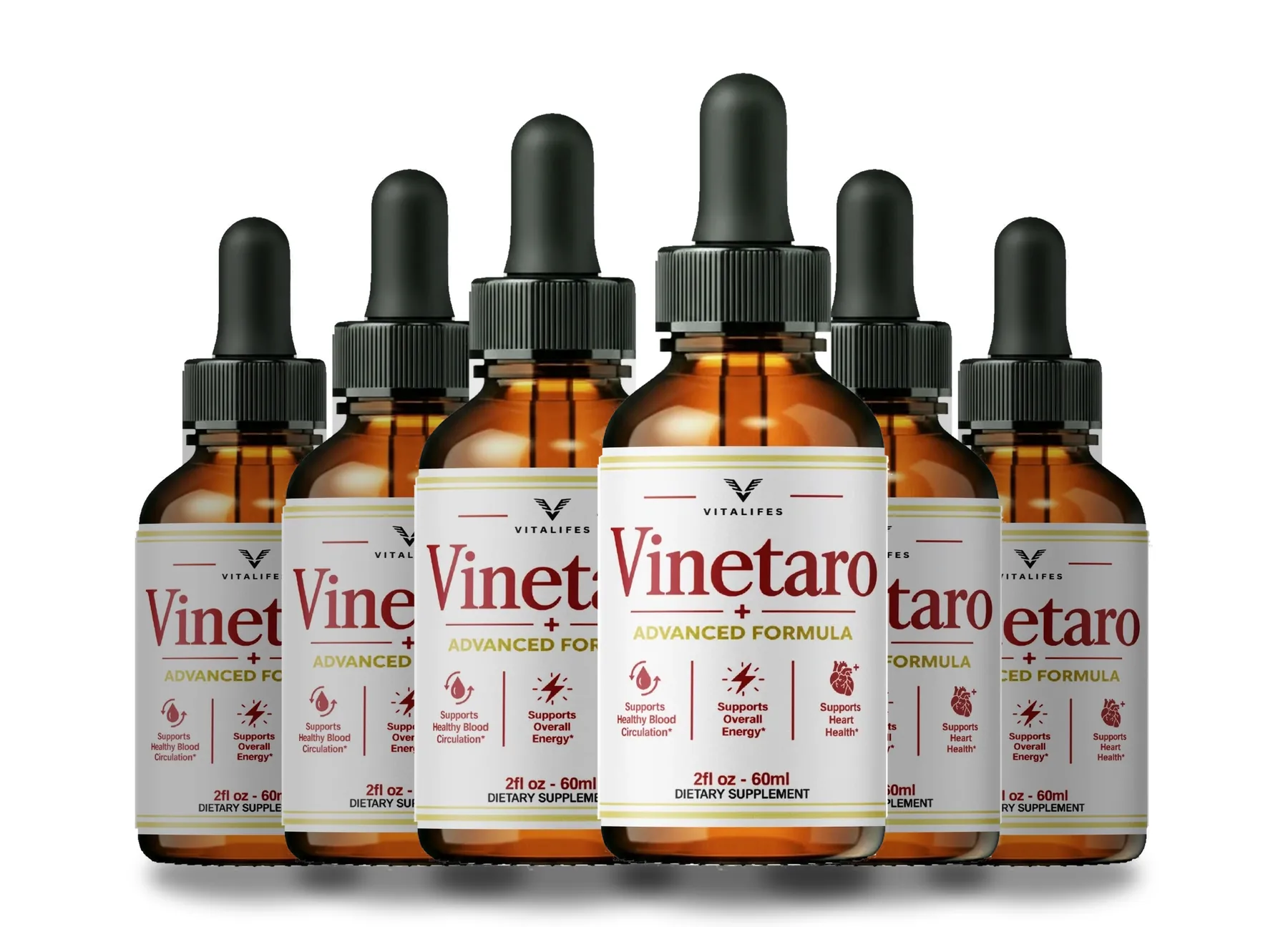
Vinetaro Drops Official Website › Circulation Supplement Guide
Circulation Supplement GuideCirculation Supplement Guide: What The Evidence Shows
Grape seed extract has the best-evidenced circulation result in this category: systolic pressure fell 6.08 mmHg across sixteen randomised trials.
L-arginine moves endothelial function, but only from about four grams a day. Ginkgo's famous walking-distance trial did not survive a Cochrane review. And almost every dose that produced a published result is measured in grams, which is the fact that decides most of this aisle.
Ingredient by ingredient, each set beside the amount its own trials used. Nothing here is attributed to any particular bottle.
What a circulation supplement is actually being asked to do
Three different measurements hide behind one word on a label.
Blood reaches tissue through vessels whose diameter is not fixed. The single layer of cells lining them, the endothelium, releases nitric oxide, the muscle in the vessel wall relaxes in response, the vessel widens and more blood passes for the same pressure. Almost every circulation ingredient sold in a bottle is a proposal about some step in that sequence.
That matters for reading a claim, because the sequence is measured in several ways and they are not interchangeable. A supplement can widen an artery on an ultrasound and leave walking distance exactly where it was.
So when a label says it supports healthy blood circulation, the honest question is not whether the ingredient does anything. It is which of those three measures moved in the study, by how much, and at what daily amount.
| What gets measured | What it tells you | What it does not tell you |
|---|---|---|
| Flow-mediated dilation (FMD) | Whether an artery widens more after a brief cuff occlusion. A direct read on endothelial function | Whether anything changed that the person would notice |
| Blood pressure | The load the whole arterial system works against, and the measure with the clearest link to long-term outcomes | Where in the body the change happened |
| Pain-free walking distance | A symptom somebody lives with, in metres | Whether the mechanism on the label is why it moved |
| Fasting glucose and HbA1c | How the body is handling sugar over hours and over months | Anything about circulation. These appear here only because several of the same plants were trialled for both |
Most figures quoted below are FMD or blood pressure. Only the ginkgo work used walking distance as its endpoint.
L-arginine: the clearest mechanism in the category, and the largest dose
Start here, because arginine sets the unit everything else is measured in.
Nitric oxide is made from L-arginine. That is not a marketing analogy, it is the substrate of the reaction, which makes arginine the one ingredient here whose mechanism needs no storytelling at all. The interesting part is what the trials found once they gave it to people.
A 2009 meta-analysis of short-term oral arginine found flow-mediated dilation improved most in the people whose baseline dilation was worst, and a later meta-analysis reached the same place from a wider set of trials.
Blood pressure is where the dose shows itself. A 2022 dose-response meta-analysis found systolic pressure moved only once intake reached roughly four grams a day and above. Below that the curve is flat. Four grams is a heaped teaspoon of powder, and it is the number to keep in mind for the rest of this page.
Arginine at a working dose is sold as a scoop of powder in a tub, not as a fraction of a blend. Any product proposing to deliver it has to find room for something close to a teaspoon, every day. That constraint is the reason arginine appears near the bottom of proprietary blends rather than as their headline.
Grape seed extract and the six-millimetre figure
The best-evidenced circulation ingredient that is not sold by the teaspoon.
Grape seed extract is a concentrate of proanthocyanidins, the same family of polyphenols that makes red wine interesting to cardiologists and makes strong tea taste the way it does. Its circulation case is better evidenced than its reputation as a generic antioxidant suggests.
A 2016 meta-analysis of sixteen randomised trials found systolic pressure fell by 6.08 mmHg. That is a figure worth sitting with. It is smaller than a blood pressure medicine and larger than most things sold in a supplement aisle, and it came out of randomised work rather than observation.
A 2022 meta-analysis added the vascular half of the picture, reporting improved flow-mediated dilation. Mechanism and outcome pointing the same way is rarer in this category than the marketing suggests, and grape seed is one of the few places it happens.
The usual trial dose sits in the hundreds of milligrams a day of a standardised extract. That is an order of magnitude below arginine and still far above what a blend can spare for one of twenty-two members.
Ginkgo biloba, walking distance, and a review that changed its mind
What happens when a famous trial meets a systematic review twenty years later.
Ginkgo is the oldest name in this category and the one with the most instructive history, because the evidence moved and the marketing did not.
The EGb 761 claudication trial is the reason ginkgo entered circulation formulas at all: a standardised extract, a real endpoint in pain-free walking distance, and a positive result. For years that trial was quoted as settled.
Then the Cochrane review of ginkgo for intermittent claudication pooled the whole literature and found no convincing evidence that ginkgo improves walking distance in a way that matters clinically. The individual trials were small, and the effect thinned as the pool grew. The NCCIH summary reflects that position rather than the 1990s one.
This is the single most useful cautionary tale in the category. An ingredient can have a famous positive trial, a plausible mechanism, decades of use and a Cochrane review that finds the effect does not hold up. All four of those things are true of ginkgo at the same time.
Ginseng, maca and eleuthero: where the energy claim comes from
Modest, real, and measured in grams almost every time.
The second phrase on most circulation labels is energy, and it is carried by a different group of plants with a different evidence shape: many small trials, varied endpoints, and effects that are statistically present and modest in size.
Panax ginseng has the largest pooled dataset. A 2014 meta-analysis found fasting glucose fell by 0.31 mmol/L across the trials, which is a real number and a small one. The more practically important ginseng finding is not about efficacy at all: a controlled trial showed it reduced the effect of warfarin, and a systematic review of its adverse effects sets out the interaction picture.
Maca's best circulation-adjacent result comes from a pilot trial in postmenopausal women at 3.3 grams a day for six weeks, where blood pressure fell. Note the unit again: grams, not milligrams. A systematic review of maca across its other uses found the trial base thin and the doses similarly large.
A 2020 Eleutherococcus trial and a 2019 meta-analysis of astragalus round out the group, both at amounts a blend cannot hold.
The ingredients that produce a feeling rather than a circulation change
Quarantined here rather than repeated in every section above.
Some things in this aisle work by making you notice them. That is not automatically a defect, but it should be named, because a sensation is easily mistaken for an effect on a vessel wall.
Caffeine is the honest example. A critical review of caffeine and blood pressure sets out what it does to pressure, which is raise it acutely in people who are not habituated. A 2024 guarana trial covers the botanical version of the same molecule. If a circulation formula contains guarana, part of what it delivers is caffeine under another name.
A 2021 meta-analysis of capsaicinoids found a thermogenic effect from red pepper compounds, and a 2026 Coleus forskohlii trial is the most recent work on another perennial of this shelf. Both produce measurable changes; neither produces the circulation outcome a label implies.
The cautionary entry is raspberry ketone. A feeding study found it failed to reduce adiposity beyond what reduced food intake explained, and a case report describes coronary vasospasm in a person taking a raspberry ketone weight-loss supplement. A single case report proves nothing on its own. It is still the kind of thing worth having read before buying an ingredient for its heart claims.
Warmth, alertness and a faster pulse are sensations. Flow-mediated dilation, millimetres of mercury and metres walked are measurements. A bottle that reliably delivers the first and never touches the second will still be described by its buyers as working, and they are not lying.
Beta-alanine and L-carnitine, and why their doses are measured in grams
The clearest illustration of what an adequate dose looks like in print.
Two more names travel into circulation formulas from sports nutrition, where they have been studied properly and where nobody pretends they are cheap to dose.
A 2017 meta-analysis established beta-alanine's effect on exercise capacity, and a 2024 meta-analysis refined the amount: 3.2 to 6.4 grams a day, sustained for weeks, because it works by slowly raising muscle carnosine rather than by doing anything on the day.
A 2024 dose-response meta-analysis of L-carnitine puts the useful range at one to four grams a day with the clearest signal near two grams. Again grams, again daily, again for weeks.
Both are included here precisely because they are unglamorous. They show what a properly dosed ingredient looks like in print: a weight in grams against a name, with nothing hiding behind the word blend.
The gap between a dropper and a gram
The one piece of arithmetic that decides most of this category.
Every dose on this page so far has been quoted in the units its trial used. Set them in one column and the shape of the category becomes obvious.
A glass dropper of the kind that ships with a two-ounce bottle delivers roughly 0.05 ml per drop, so a two-drop serving is about a tenth of a millilitre. Even if that tenth of a millilitre were pure active ingredient with no carrier oil, no glycerine, no water and no flavouring, it would weigh about a tenth of a gram.
Against four grams of arginine, that is a fortieth. Against 3.2 grams of beta-alanine it is a thirty-second. Against 3.3 grams of maca it is a thirty-third. The comparison is not close enough to need rounding, and it applies to every liquid in this category rather than to one brand.
None of which means a dropper is useless. It means a dropper is the wrong format for the gram-scale ingredients in this guide, and that a liquid making circulation claims is either using different ingredients, much smaller amounts, or the reader never doing this arithmetic.
| Ingredient | The daily amount behind the published result | As a multiple of a 0.1 ml serving |
|---|---|---|
| L-arginine | 4 g/day before systolic pressure moved | About 40x |
| Beta-alanine | 3.2-6.4 g/day, sustained for weeks | About 32-64x |
| Maca root | 3.3 g/day for six weeks | About 33x |
| L-carnitine | 1-4 g/day, clearest near 2 g | About 10-40x |
| Grape seed extract | Hundreds of mg/day of standardised extract | Within reach on weight alone, if it were the only thing in the bottle |
| Chromium | Above 200 mcg/day before glycaemic markers moved | Comfortably within reach; it is a trace mineral |
The right-hand column treats the whole 0.1 ml serving as pure ingredient. Every real liquid is mostly carrier, so the true multiples are larger.
The three interaction families a circulation formula runs into
Named once each, with the paper attached, instead of hedged repeatedly.
Circulation ingredients interact with medicines more often than most supplement categories, for a reason that follows directly from the mechanism: anything that changes vessel tone or platelet behaviour is operating in the same territory as several common prescriptions.
Anticoagulation and antiplatelet therapy. The ginseng and warfarin work is the documented example, and the trial measured a reduced warfarin effect rather than a theoretical one. Ginkgo is discussed in the same context for platelet reasons.
Blood pressure medicines. An ingredient that lowers pressure by six millimetres is doing a small version of what the prescription does, and the two add up. The liquorice literature is the mirror image: liquorice raises pressure and retains sodium, and the 2026 review of licorice-induced pseudohyperaldosteronism sets out how ordinary the syndrome is at ordinary intakes.
Absorption and metabolism. A 2025 review of food, herb and drug interactions covers the general case, and a 2026 grapefruit and tacrolimus case report shows how sharply it can bite when a transplant medicine is involved. The NCCIH guidance on using supplements wisely is the plain-English version worth sending to somebody else.
- Anyone on warfarin, a direct oral anticoagulant, or daily aspirin.
- Anyone on blood pressure medicine, where a small additional fall is still a fall.
- Anyone on a medicine with a narrow therapeutic window: transplant immunosuppressants, lithium, some anti-epileptics.
- Anyone with a surgery date, since several of these are stopped a fortnight before as routine.
Why every bottle in this category says supports
A sentence about the law that changes how you read every label in the aisle.
The word is not a stylistic tic. Under the Dietary Supplement Health and Education Act a supplement may describe an effect on the structure or function of the body, and may not claim to diagnose, treat, cure or prevent a disease. Supports healthy blood circulation is a structure-function claim. Improves circulation in peripheral artery disease would be a drug claim, and the same bottle could not carry it.
That is why the asterisk exists, and why the sentence it points to says the Food and Drug Administration has not evaluated the statement. The disclaimer is a legal condition of making the claim at all, not a badge of anything.
The corollary matters more than the rule. Because no agency evaluates the claim before it is printed, the printed claim carries no evidentiary weight whatsoever. An analysis of FDA warnings in JAMA Network Open and a 2022 review of the tainted-supplements database document what turns up when the agency does look: undeclared pharmaceutical ingredients in products sold as botanical blends, found after sale rather than before it.
What to do with all of this
Three sentences you could carry into a pharmacy.
The practical reading of this guide is shorter than the guide.
Ingredients with a real circulation result exist, and there are fewer of them than the shelf suggests: grape seed on blood pressure, arginine on endothelial function at gram doses, and a set of adaptogens with modest effects at gram doses. Ginkgo is the reminder that a famous result can fail to replicate.
The doses those results came from are almost all measured in grams a day, sustained for weeks. That single fact disqualifies more products in this aisle than any ingredient argument, and it is checkable on the back of the bottle before you buy anything.
And the checking is the part worth keeping. A label printing a weight against every name lets you run the comparison in this guide yourself, for any brand, in about two minutes. A blend total, or no panel at all, removes that option and replaces it with nothing.
The seven-check scorecard turns everything above into something you can run at a shelf, on any brand, including this one. Vinetaro Drops is scored on it in full.
Sources behind this circulation supplement guide
Thirty-one papers and agency pages, every one of them public and linked.
- Shiraseb F, Asbaghi O, Bagheri R, et al. Effect of l-arginine supplementation on blood pressure in adults: a systematic review and dose-response meta-analysis of randomized clinical trials. Adv Nutr. 2022;13(4):1226-1242. Systolic pressure moved only at doses of 4 g/day or more. PMID 34967840. https://pubmed.ncbi.nlm.nih.gov/34967840/
- Rodrigues-Krause J, Krause M, Rocha IMGD, et al. Association of l-arginine supplementation with markers of endothelial function in patients with cardiovascular or metabolic disorders: a systematic review and meta-analysis. Nutrients. 2018;11(1):15. PMID 30577559. https://pubmed.ncbi.nlm.nih.gov/30577559/
- Bai Y, Sun L, Yang T, et al. Increase in fasting vascular endothelial function after short-term oral L-arginine is effective when baseline flow-mediated dilation is low: a meta-analysis of randomized controlled trials. Am J Clin Nutr. 2009;89(1):77-84. PMID 19056561. https://pubmed.ncbi.nlm.nih.gov/19056561/
- Zhang H, Liu S, Li L, et al. The impact of grape seed extract treatment on blood pressure changes: a meta-analysis of 16 randomized controlled trials. Medicine (Baltimore). 2016;95(33):e4247. Systolic pressure fell by 6.08 mmHg. PMID 27537554. https://pubmed.ncbi.nlm.nih.gov/27537554/
- Foshati S, Nouripour F, Sadeghi E, et al. The effect of grape (Vitis vinifera) seed extract supplementation on flow-mediated dilation, blood pressure, and heart rate: a systematic review and meta-analysis of controlled trials with duration- and dose-response analysis. Pharmacol Res. 2022;175:105905. PMID 34798267. https://pubmed.ncbi.nlm.nih.gov/34798267/
- Nicolaï SP, Kruidenier LM, Bendermacher BL, et al. Ginkgo biloba for intermittent claudication. Cochrane Database Syst Rev. 2013;2013(6):CD006888. PMID 23744597. https://pubmed.ncbi.nlm.nih.gov/23744597/
- Peters H, Kieser M, Hölscher U. Demonstration of the efficacy of ginkgo biloba special extract EGb 761 on intermittent claudication — a placebo-controlled, double-blind multicenter trial. Vasa. 1998;27(2):106-10. Dosing: three film-coated tablets daily for 24 weeks; the abstract does not state the milligrams. PMID 9612115. https://pubmed.ncbi.nlm.nih.gov/9612115/
- Ginkgo. National Center for Complementary and Integrative Health, National Institutes of Health. https://www.nccih.nih.gov/health/ginkgo
- Shishtar E, Sievenpiper JL, Djedovic V, et al. The effect of ginseng (the genus Panax) on glycemic control: a systematic review and meta-analysis of randomized controlled clinical trials. PLoS One. 2014;9(9):e107391. Fasting glucose fell by 0.31 mmol/L. PMID 25265315. https://pubmed.ncbi.nlm.nih.gov/25265315/
- Yuan CS, Wei G, Dey L, et al. Brief communication: American ginseng reduces warfarin's effect in healthy patients: a randomized, controlled trial. Ann Intern Med. 2004;141(1):23-7. PMID 15238367. https://pubmed.ncbi.nlm.nih.gov/15238367/
- Coon JT, Ernst E. Panax ginseng: a systematic review of adverse effects and drug interactions. Drug Saf. 2002;25(5):323-44. PMID 12020172. https://pubmed.ncbi.nlm.nih.gov/12020172/
- Stojanovska L, Law C, Lai B, et al. Maca reduces blood pressure and depression, in a pilot study in postmenopausal women. Climacteric. 2015;18(1):69-78. Dose: 3.3 g/day for 6 weeks. PMID 24931003. https://pubmed.ncbi.nlm.nih.gov/24931003/
- Lee MS, Lee HW, You S, et al. The use of maca (Lepidium meyenii) to improve semen quality: a systematic review. Maturitas. 2016;92:64-69. PMID 27621241. https://pubmed.ncbi.nlm.nih.gov/27621241/
- Tohda C, Matsui M, Inada Y, et al. Combined treatment with two water extracts of Eleutherococcus senticosus leaf and rhizome of Drynaria fortunei enhances cognitive function: a placebo-controlled, randomized, double-blind study in healthy adults. Nutrients. 2020;12(2):303. PMID 31979283. https://pubmed.ncbi.nlm.nih.gov/31979283/
- Zhang L, Shergis JL, Yang L, et al. Astragalus membranaceus (Huang Qi) as adjunctive therapy for diabetic kidney disease: an updated systematic review and meta-analysis. J Ethnopharmacol. 2019;239:111921. The authors rated the included trials low quality. PMID 31034954. https://pubmed.ncbi.nlm.nih.gov/31034954/
- De Giuseppe R, Di Napoli I, Granata F, et al. Caffeine and blood pressure: a critical review perspective. Nutr Res Rev. 2019;32(2):169-175. PMID 30947761. https://pubmed.ncbi.nlm.nih.gov/30947761/
- Talik TN, Penna EM, Hack BP, et al. Effects of acute guarana (Paullinia cupana) ingestion on mental performance and vagal modulation compared to a low dose of caffeine. Nutrients. 2024;16(12):1892. PMID 38931247. https://pubmed.ncbi.nlm.nih.gov/38931247/
- Irandoost P, Lotfi Yagin N, Namazi N, et al. The effect of capsaicinoids or capsinoids in red pepper on thermogenesis in healthy adults: a systematic review and meta-analysis. Phytother Res. 2021;35(3):1358-1377. PMID 33063385. https://pubmed.ncbi.nlm.nih.gov/33063385/
- Channangihalli Thimmegowda S, Hussain Mirza FH, Venkataraman R, et al. A 12-week, double-blind, quasi-randomized, placebo-controlled study to evaluate the efficacy and safety of Coleus forskohlii (Forcslim) on body weight loss. J Int Soc Sports Nutr. 2026;23(1):2725137. Weight fell 1.93 kg against placebo over 12 weeks. PMID 42678522. https://pubmed.ncbi.nlm.nih.gov/42678522/
- Khattar A, Beeton I. Coronary vasospasm and raspberry ketones weight-loss supplement: is there a connection? Anatol J Cardiol. 2020;24(3):205-208. PMID 32870171. https://pubmed.ncbi.nlm.nih.gov/32870171/
- Cotten BM, Diamond SA, Banh T, et al. Raspberry ketone fails to reduce adiposity beyond decreasing food intake in C57BL/6 mice fed a high-fat diet. Food Funct. 2017;8(4):1512-1518. PMID 28378858. https://pubmed.ncbi.nlm.nih.gov/28378858/
- Saunders B, Elliott-Sale K, Artioli GG, et al. β-alanine supplementation to improve exercise capacity and performance: a systematic review and meta-analysis. Br J Sports Med. 2017;51(8):658-669. PMID 27797728. https://pubmed.ncbi.nlm.nih.gov/27797728/
- Georgiou GD, Antoniou K, Antoniou S, et al. Effect of beta-alanine supplementation on maximal intensity exercise in trained young male individuals: a systematic review and meta-analysis. Int J Sport Nutr Exerc Metab. 2024;34(6):397-412. Doses: 3.2-6.4 g/day. PMID 39032921. https://pubmed.ncbi.nlm.nih.gov/39032921/
- Mirrafiei A, Jayedi A, Shab-Bidar S. The effects of L-carnitine supplementation on weight loss, glycemic control, and cardiovascular risk factors in patients with type 2 diabetes: a systematic review and dose-response meta-analysis of randomized controlled trials. Clin Ther. 2024;46(5):404-410. Effects tracked doses of 1-4 g/day. PMID 38594107. https://pubmed.ncbi.nlm.nih.gov/38594107/
- Ceccuzzi G, Rapino A, Perna B, et al. Liquorice toxicity: a comprehensive narrative review. Nutrients. 2023;15(18):3866. 104 case reports of hypertension and hypokalaemia from excess intake. PMID 37764649. https://pubmed.ncbi.nlm.nih.gov/37764649/
- Yoshino T, Makino T. Clinical risk factors of licorice-induced pseudohyperaldosteronism: a 2026-updated narrative review. Front Pharmacol. 2026;17:1840515. PMID 42292819. https://pubmed.ncbi.nlm.nih.gov/42292819/
- Bukowska B, Grzegorowska A, Szczerkowska-Majchrzak E, et al. Hazardous interactions between food, herbs, and drugs in the first stage of biotransformation: case reports of adverse drug interactions in humans. Int J Mol Sci. 2025;26(11):5077. PMID 40507996. https://pubmed.ncbi.nlm.nih.gov/40507996/
- Östman V, Hamberg AK, Yamamoto S, et al. Severe rise in tacrolimus levels following blood orange and grapefruit juice intake in a kidney transplant recipient: a case report. J Med Case Rep. 2026;20(1):64. PMID 42706579. https://pubmed.ncbi.nlm.nih.gov/42706579/
- Tucker J, Fischer T, Upjohn L, et al. Unapproved pharmaceutical ingredients included in dietary supplements associated with US Food and Drug Administration warnings. JAMA Netw Open. 2018;1(6):e183337. PMID 30646238. https://pubmed.ncbi.nlm.nih.gov/30646238/
- White CM. Continued risk of dietary supplements adulterated with approved and unapproved drugs: assessment of the US Food and Drug Administration's tainted supplements database 2007 through 2021. J Clin Pharmacol. 2022;62(8):928-934. PMID 35285963. https://pubmed.ncbi.nlm.nih.gov/35285963/
- Using Dietary Supplements Wisely. National Center for Complementary and Integrative Health, National Institutes of Health. https://www.nccih.nih.gov/health/using-dietary-supplements-wisely
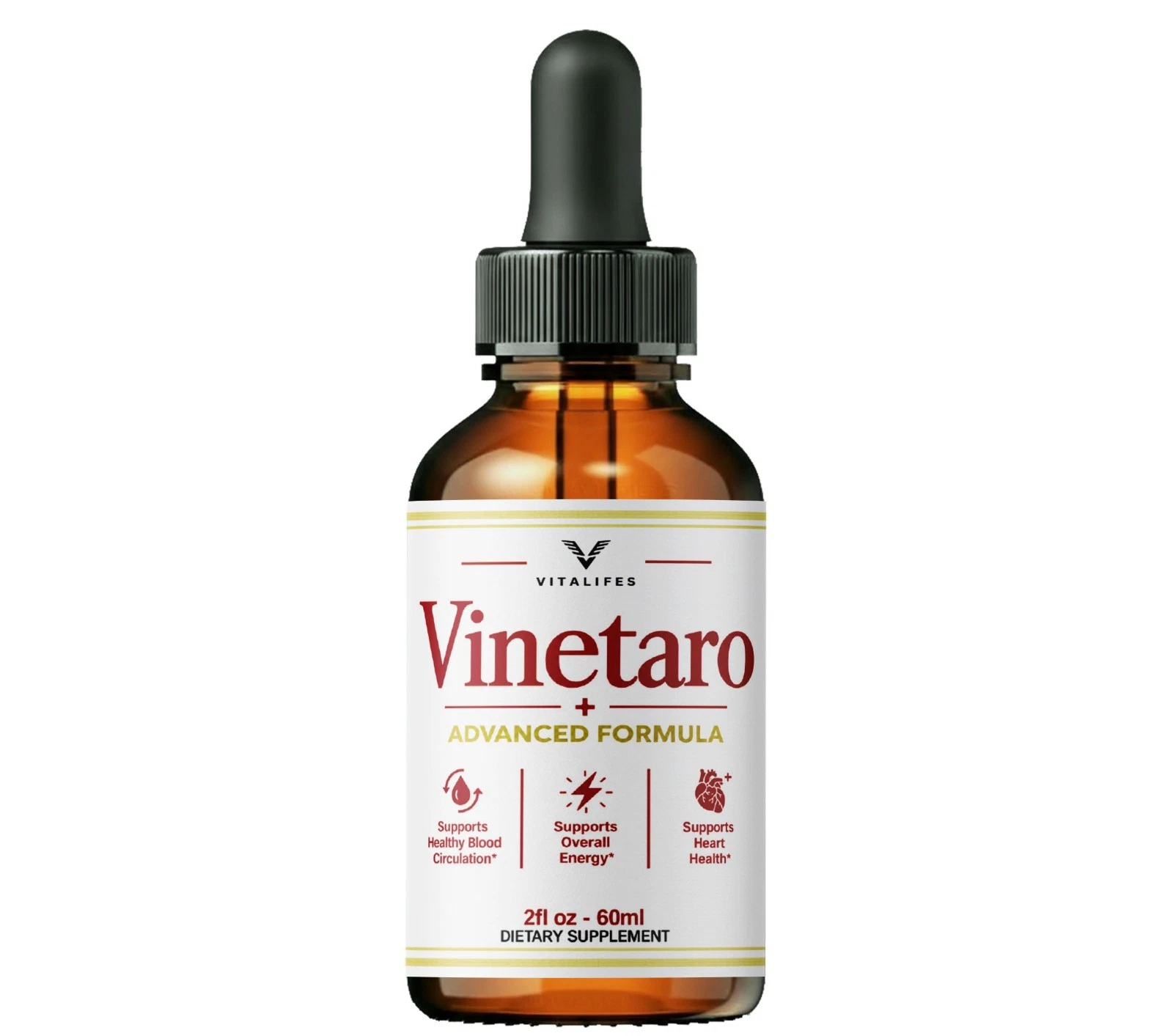
Order Vinetaro Drops with this guide open beside you
Two drops a day after a meal, 2 fl oz (60 ml) in amber glass, and 60 days from the date of purchase to change your mind.
Price shown at the seller’s checkout · 60-day money-back guarantee
Order Vinetaro Drops On The Official Website2 drops daily after a meal · 2 fl oz (60 ml) a bottle · lot VIN-26/GE-4119