Vinetaro Drops Official Website › Blog › Blend Arithmetic
What A 200 mg Blend Divided Twenty-Two Ways Can Hold
A proprietary blend is a single weight with a list of names beneath it. The list is the marketing and the weight is the constraint, and one division nobody prints usually settles whether the list means anything.
- A proprietary blend prints one total weight, then lists what is in it without saying how much of each.
- One list circulating under this product name states a 200 mg blend with 22 named components.
- Divided evenly that is 9.1 mg each, which is below every botanical dose quoted in this article.
- Blends are not divided evenly. The headline ingredient usually takes most of the total, which makes the tail smaller still.
- None of this is a statement about this bottle, which publishes no blend, no total and no list. It is what the arithmetic does to any label built this way.
What a proprietary blend is, and why it exists
A proprietary blend is a permitted way of labelling a mixture. Instead of a weight against each ingredient, the label prints a single total for the group and lists the members underneath, conventionally in descending order of weight.
The stated reason is trade secrecy: a manufacturer who publishes exact ratios has handed a competitor the formula. That argument is real, and in a small number of cases it is the actual reason.
The practical effect, whatever the intent, is that the most important number on the label becomes unavailable. A reader can see that an ingredient is present and cannot see whether it is present at a dose anybody has ever studied. Those are very different pieces of information and only one of them is on the label.
Descending order is the one clue a blend still gives
The convention that members are listed heaviest first is genuinely useful. It does not give weights, but it does tell you which ingredient the formula is built around, and it tells you that anything near the bottom of a long list is present at a small fraction of an already small total.
The division nobody prints
Here is the arithmetic, which takes about four seconds and is the single most useful thing a reader can do with a blend. Take the total, divide by the number of names.
| Members in the blend | Average per member, if split evenly | How that compares to a studied dose |
|---|---|---|
| 2 | 100 mg | Within reach for several botanical extracts |
| 5 | 40 mg | Enough for a concentrated standardised extract, little else |
| 10 | 20 mg | Below almost every botanical dose in the literature |
| 22 | 9.1 mg | Below every botanical dose quoted on this page, most by one or two orders of magnitude |
A 200 mg blend divided evenly. Blends are rarely even, which makes the picture worse rather than better: the named headline ingredient usually takes most of the total and the rest share what is left.
At 22 members the average share is 9.1 mg. For scale, that is roughly the weight of a few grains of table salt, and it is what each ingredient would get if the manufacturer had split the total with a ruler.
The number of names is the variable that does the damage. Going from five members to twenty-two takes the average from 40 mg to nine, and the list gets more impressive as it gets less substantial. That is not an accident of formulation; a longer list reads better on a sales page and costs almost nothing to produce.
Why an even split is the optimistic version
Blends are not split evenly, and the direction of the skew is consistent.
The ingredient the product is marketed around takes the bulk of the total, because it has to be present at a defensible amount for the marketing to survive scrutiny. What is left is shared among everything else, and the tail of a long list can be present at amounts measured in fractions of a milligram.
That practice has a name in the trade: fairy dusting. An ingredient is added at an amount sufficient to justify printing it on the label and insufficient to do anything. The blend format is what makes it invisible, because a reader who cannot see per-ingredient weights cannot tell a working dose from a token one.
- A twenty-two name blend with an even split gives each member 9.1 mg.
- The same blend with a realistic skew gives the headline ingredient perhaps half the total and leaves the remaining twenty-one to share the rest.
- That puts the tail around 4 to 5 mg each, and the last few names lower still.
- Descending order means the names you recognise from the sales page are often near the bottom, because recognisable names are cheap to list.
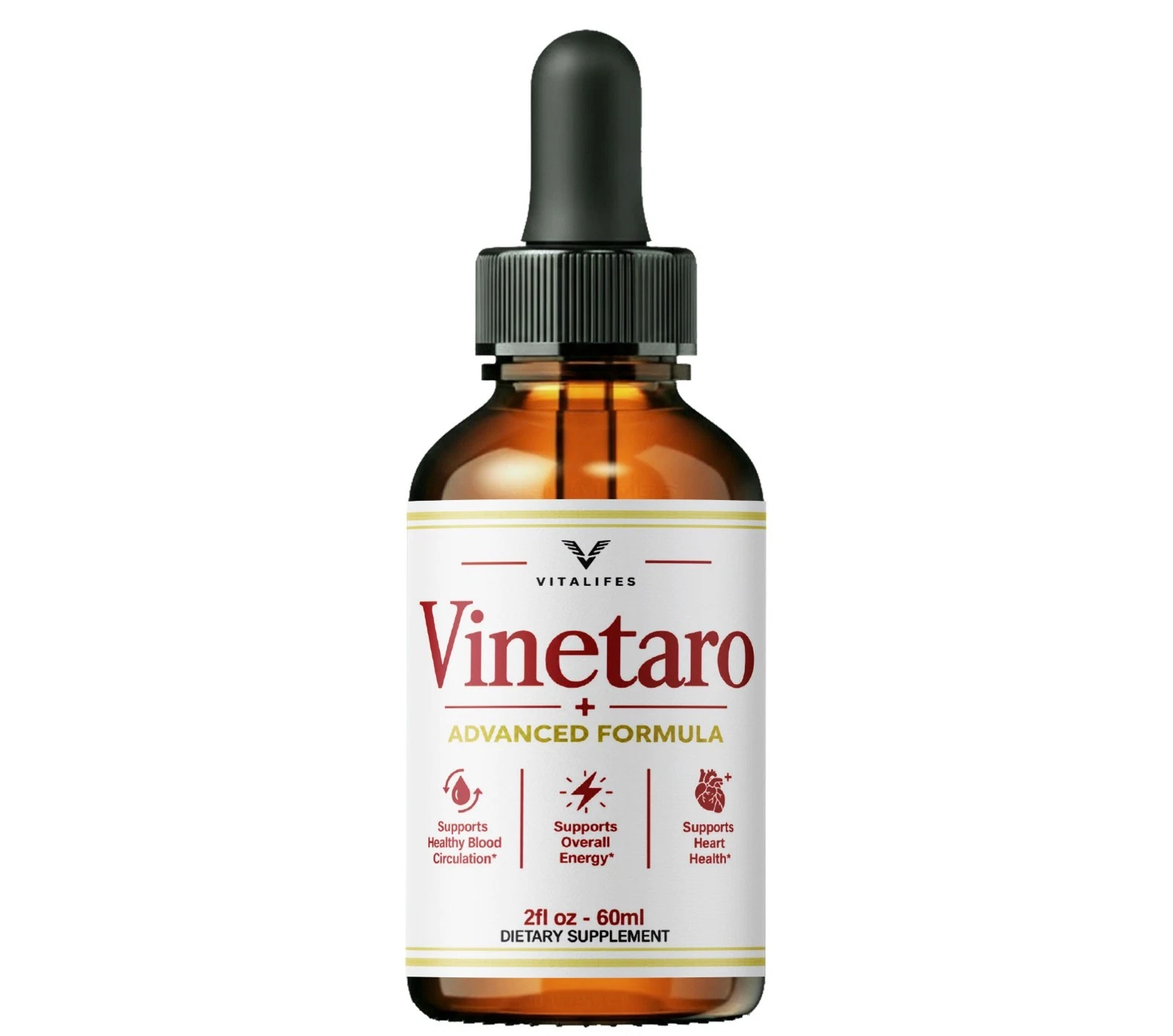
A bottle that prints no blend at all: Vinetaro Drops
Two drops a day after a meal, 2 fl oz (60 ml) in amber glass, and 60 days from the date of purchase to decide what you think of that.
Price shown at the seller’s checkout · 60-day money-back guarantee
Order Vinetaro Drops On The Official Website2 drops daily after a meal · 2 fl oz (60 ml) a bottle · lot VIN-26/GE-4119
The same numbers against published doses
Arithmetic on its own is just arithmetic. It becomes an argument when the shares are set beside the amounts that produced published results.
A 2024 dose-response meta-analysis of cinnamon is the most useful single source here, because it maps the curve rather than reporting one point, and the pooled mean sits near two grams a day. An earlier meta-analysis reached a comparable place. Two grams is ten times a whole 200 mg blend.
A 2019 bitter melon meta-analysis and a 2021 gymnema trial in impaired glucose tolerance sit in the same territory: hundreds to thousands of milligrams a day, sustained for weeks. A 2020 meta-analysis of Irvingia gabonensis covers the African mango work, which ran at 150 mg twice daily.
A 2020 meta-analysis of green tea completes the picture. Across all five, the smallest daily amount behind a published result is larger than the average share of a twenty-two member blend, and most are larger by one or two orders of magnitude.
| Ingredient | The daily amount behind a published result | Share of a 200 mg blend needed to reach it |
|---|---|---|
| Cinnamon | A pooled mean near 2 g/day across the trials | Ten whole blends a day, with nothing else in them |
| Bitter melon | 2,000 mg/day, with the 500 and 1,000 mg arms flat | Ten whole blends a day |
| Gymnema | 600 mg/day, split before meals, over twelve weeks | Three whole blends a day |
| African mango seed | 150 mg twice daily, so 300 mg/day | One and a half whole blends a day |
| Green tea catechins | Hundreds of mg/day of catechins in the pooled work | Most of a blend, as the only member |
The right-hand column asks what share of the blend one ingredient would need in order to reach its own studied dose. Where the answer is more than one whole blend, no division of the total can get there.
When a blend is perfectly reasonable
It would be dishonest to leave this as a blanket condemnation, because there are cases where a blend is fine and a reader should be able to spot them.
Short blends. Two or three members in a 200 mg total leaves each at a weight that can matter. The problem is length, not the format.
Potent ingredients. Some things work at single-digit milligrams, and standardised extracts concentrated twenty or fifty to one are exactly what the format was built for. A blend of concentrates behaves very differently from a blend of ground plant material.
Micronutrients. Vitamins and trace minerals are dosed in micrograms and milligrams. A mineral inside a blend can easily be at a full intake, which is why chromium is the one ingredient in this whole category that a small weight can carry properly.
How to read one in thirty seconds
- Find the total. It is the only weight the blend gives you, and everything else is a share of it.
- Count the names. Include everything down to the last comma.
- Divide. That is the average share, and it is the optimistic case.
- Halve it for the tail. The first name takes more than its share, so everything after the first few takes less.
- Compare to one studied dose. One is enough. If the average share is a tenth of the smallest dose in the literature, the list is a list rather than a formula.
If a blend's total weight is smaller than the daily dose of any single ingredient named in it, then that ingredient is underdosed no matter how the blend is divided. No arithmetic, no judgement, no expertise: the total is a ceiling, and a ceiling below a floor settles the question by itself.
What this means for a bottle with no blend at all
Everything above is about labels that print a blend. This bottle prints nothing: no total, no list, no serving in millilitres.
The 200 mg figure and the 22 names come from lists other websites publish under this product name, and they are reproduced here to show what the format does rather than to describe what is in this liquid. Treating them as this bottle's formula would be the exact mistake this website spends most of its pages refusing to make.
The honest summary is uncomfortable and short. A blend at least gives you a ceiling to work against, and a ceiling is something. No panel gives you no ceiling, so the arithmetic on this page cannot be run on this product at all — which is itself the most informative thing the exercise produces.
References
- Moridpour AH, Kavyani Z, Khosravi S, et al: The effect of cinnamon supplementation on glycemic control in patients with type 2 diabetes mellitus: an updated systematic review and dose-response meta-analysis of randomized controlled trials. Phytother Res. 2024;38(1):117-130. PMID 37818728. https://pubmed.ncbi.nlm.nih.gov/37818728/
- Allen RW, Schwartzman E, Baker WL, et al: Cinnamon use in type 2 diabetes: an updated systematic review and meta-analysis. Ann Fam Med. 2013;11(5):452-9. Doses ranged from 120 mg/day to 6 g/day for 4 to 18 weeks. PMID 24019277. https://pubmed.ncbi.nlm.nih.gov/24019277/
- Peter EL, Kasali FM, Deyno S, et al: Momordica charantia L. lowers elevated glycaemia in type 2 diabetes mellitus patients: systematic review and meta-analysis. J Ethnopharmacol. 2019;231:311-324. PMID 30385422. https://pubmed.ncbi.nlm.nih.gov/30385422/
- Lee J, Chung M, Fu Z, et al: The effects of Irvingia gabonensis seed extract supplementation on anthropometric and cardiovascular outcomes: a systematic review and meta-analysis. J Am Coll Nutr. 2020;39(5):388-396. PMID 31855111. https://pubmed.ncbi.nlm.nih.gov/31855111/
- Xu R, Bai Y, Yang K, et al: Effects of green tea consumption on glycemic control: a systematic review and meta-analysis of randomized controlled trials. Nutr Metab (Lond). 2020;17:56. Fasting glucose fell by 1.44 mg/dL. PMID 32670385. https://pubmed.ncbi.nlm.nih.gov/32670385/
- Gaytán Martínez LA, Sánchez-Ruiz LA, Zuñiga LY, et al: Effect of Gymnema sylvestre administration on glycemic control, insulin secretion, and insulin sensitivity in patients with impaired glucose tolerance. J Med Food. 2021;24(1):28-32. Dose: 300 mg twice daily. PMID 32460589. https://pubmed.ncbi.nlm.nih.gov/32460589/
Order Vinetaro Drops with the arithmetic in front of you
Two drops a day after a meal, 2 fl oz (60 ml) in amber glass, four pack sizes and 60 days from the date of purchase.
Price shown at the seller’s checkout · 60-day money-back guarantee
Order Vinetaro Drops On The Official Website2 drops daily after a meal · 2 fl oz (60 ml) a bottle · lot VIN-26/GE-4119