Vinetaro Drops Official Website › Blog › The Missing Panel
What A Missing Supplement Facts Panel Actually Means
A supplement label has one surface that is written for the buyer and one that is written for the regulator. When only the first one ships, a specific and surprisingly narrow set of things becomes impossible — and a wider set stays perfectly possible.
- A Supplement Facts panel is the back-of-pack table: serving size, ingredients, amounts, Daily Values and the Other Ingredients line.
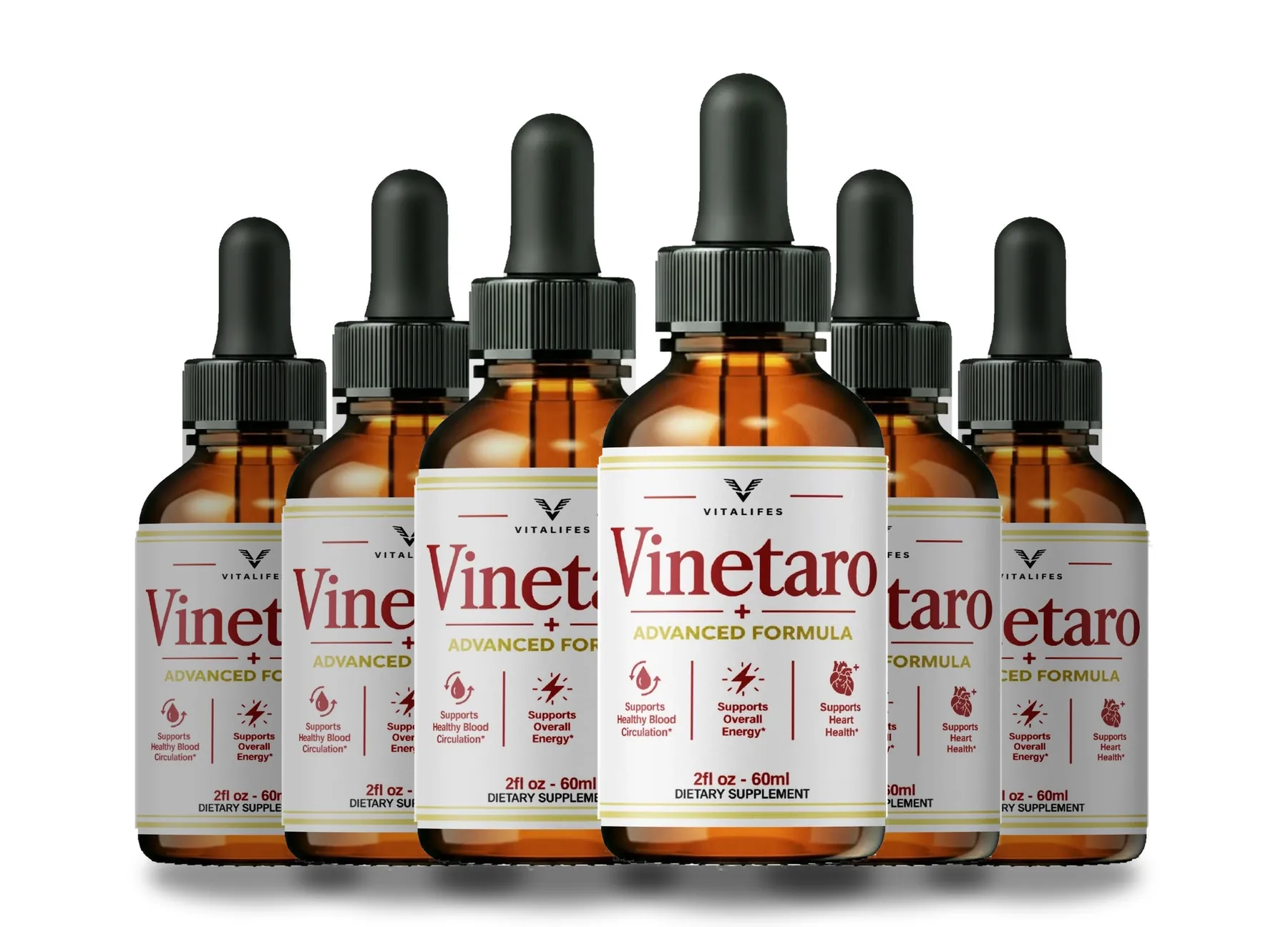
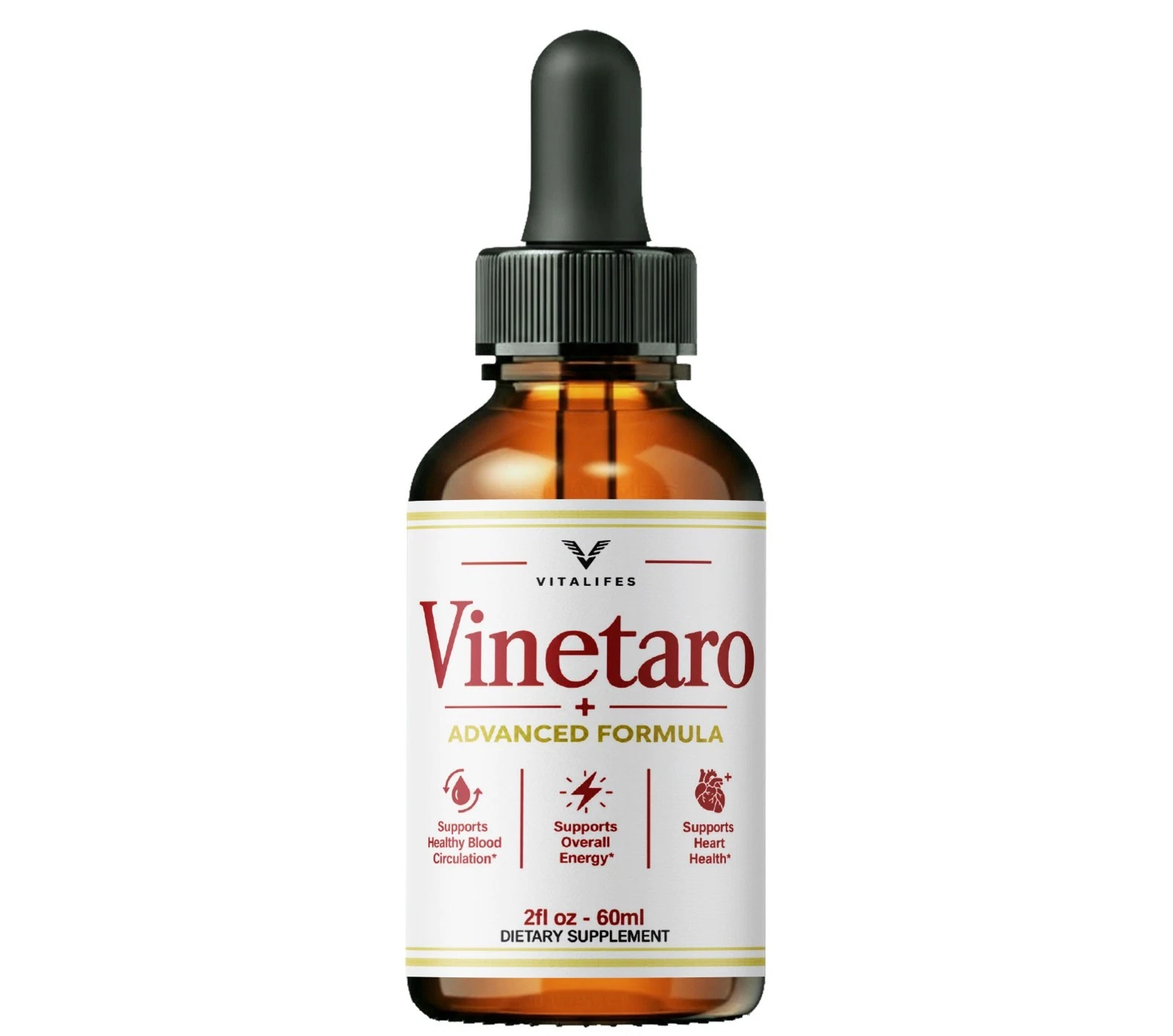
- The artwork for this product publishes a front face only. It carries claims and a volume, and no ingredient at all.
- That removes exactly one thing a reader can normally do for themselves: screen the contents against an allergy list or a medicine list.
- It does not, on its own, say anything about what is in the liquid or whether it is safe.
- There are four plausible explanations for a front-only label and they are not equally serious. Telling them apart needs a photograph of a bottle somebody already owns.
What a Supplement Facts panel actually is
The panel is the bordered table on the back or side of a supplement container. It is not a design choice and it is not a courtesy. It is a defined format with a required order: serving size at the top, servings per container beneath it, then a row for each dietary ingredient with the amount per serving, then the percent Daily Value where an official one exists, and finally the Other Ingredients line outside the box.
Each part does a different job, and it is worth separating them, because a label can be short on one and complete on another. The serving size makes the whole table meaningful, since every figure below it is per serving. The names allow a screen. The amounts allow a comparison. The Daily Values give a sense of scale for the nutrients that have one.
The Other Ingredients line is the part readers skip and the part that decides most practical questions on a liquid. It names the carrier, which on a dropper product is usually oil, glycerine, water or alcohol and is most of what is in the bottle by volume. It is also where a sweetener, a preservative and the common allergens are declared.
| What a panel prints | What it lets a reader do | Available on a front-only label |
|---|---|---|
| Serving size and servings per container | Work out how long a bottle lasts and what one serving costs | Partly. The face gives two drops daily and a 60 ml volume, so the arithmetic is possible; the seller's own listings disagree with it |
| Each ingredient by name | Screen against an allergy, a sensitivity, or a plant somebody reacts to | No |
| An amount against each name | Compare what is in the bottle with what the published trials used | No |
| Percent Daily Value where one exists | See instantly whether a nutrient is a trace or a real dose | No |
| The Other Ingredients line | Find the carrier, the preservative, the sweetener and the allergen warnings | No. On a liquid this is the line that names the oil, glycerine or alcohol the product is mostly made of |
The right-hand column is this bottle, read from the vendor artwork on 19 September 2026.
The one thing that becomes impossible
It is worth being precise about the loss, because vagueness here helps nobody. A front-only label removes one capability, and it is a real one.
Screening is a mechanical process. Somebody with a ragweed sensitivity checks a list for the daisy family. Somebody on warfarin checks it for the handful of plants known to interfere. Somebody who reacts to stimulants checks for caffeine and its botanical sources. All of those are list operations, and all of them need a list.
Without one, that step cannot be completed by anybody reading the packaging, however carefully they read it. Not by a pharmacist, not by a prescriber, not by the person who bought it. The limit is in the information rather than in the person.
Why substituting somebody else's list does not fix it
4 different formulas circulate publicly under this product name. They share exactly 2 members between them and their stated servings sit about forty times apart. Borrowing one of those lists and treating it as this bottle's would produce a screen that feels complete and is not, which is worse than a screen that is honestly unavailable.
The ingredients page prints all 4 with the source of each attached, for exactly that reason: readable, attributed, and never assembled into a panel.
What stays perfectly possible
A surprising amount, and this is the half that usually gets lost in the alarm.
The serving instruction is printed and unambiguous: two drops daily, after a meal, taken consistently. The volume is printed at 60 ml. Between them, the arithmetic of how long a bottle lasts is fully available, and it is the subject of another article here.
The claims are printed, and they are the ceiling on what the product may be sold to do. Three starred phrases: healthy blood circulation, overall energy, heart health. That ceiling is legally meaningful and it is readable from the front of the box.
The seller's own terms are all available too. A day count on the guarantee, a refund procedure, a lot code, a returns address. None of those needs a panel, and they decide what happens if something goes wrong.
- Available: serving instruction, timing, net volume, the three label claims, the asterisk convention and the agency disclaimer it points at.
- Available: guarantee length, refund steps, lot code, certificate reference, returns address.
- Not available: an allergen screen, an interaction screen, a dose comparison against any published trial.
- Not available: what the liquid is mostly made of, which on a dropper product is the carrier rather than any active.
Read the label arithmetic before ordering Vinetaro Drops
Two drops a day after a meal, 2 fl oz (60 ml) in amber glass, four pack sizes and 60 days from the date of purchase to change your mind.
Price shown at the seller’s checkout · 60-day money-back guarantee
Order Vinetaro Drops On The Official Website2 drops daily after a meal · 2 fl oz (60 ml) a bottle · lot VIN-26/GE-4119
Four reasons a label ships without one
Assuming the worst is as unhelpful as assuming the best, so here are the four explanations that fit what is actually observable, with how you would tell them apart.
| The explanation | How likely it is | How you would tell |
|---|---|---|
| The panel is on a back label that did not ship with the marketing pack | The most likely of the four | A photograph of the back of a bottle somebody already owns settles it in seconds |
| The panel exists and the seller chose not to publish it | Possible, and unremarkable in this trade | Asking the order desk for it. A seller who has one can send one |
| Several different formulas ship under one name and no single panel is true of all of them | Consistent with the 4 contradictory lists circulating publicly | Comparing the lot code on two bottles bought months apart |
| There is no panel anywhere | The least likely, and the only one that would be a compliance problem rather than a publishing one | Not something a website can determine from outside |
Set out because the difference matters. An unpublished panel and an absent panel are very different situations, and nothing in the pack distinguishes them.
The first is the most likely by a distance. Marketing packs are assembled from product photography, and product photography shows the face. A back-label shot is not the kind of image a listing needs, so its absence from a pack is weak evidence about whether it exists on the bottle.
That is why this website keeps saying the artwork names no ingredient rather than saying the product has no panel. The first statement is verifiable and the second is not, and the difference is the whole of the honesty available here.
What turns up when an agency does look
A dietary supplement does not need pre-market approval, so enforcement happens after sale. That makes the record of what has been found a useful thing for a buyer to have read once.
An analysis of FDA warnings published in JAMA Network Open documented products sold as botanical supplements that were found to contain undeclared pharmaceutical ingredients. A 2022 review of the agency's tainted-products database covers the same ground across a longer period, and the categories that recur are the ones where a fast, obvious effect sells the bottle.
Two things follow, and only two. The first is that a printed panel is not a guarantee of what is in a bottle, which is worth remembering before treating panels as proof. The second is that an undeclared formula cannot be checked against those findings at all, which is a reason for care rather than a finding about this liquid.
The NCCIH guidance on using supplements wisely is the plain-English version of all of this and is the single best page to send to somebody who has just bought something on a recommendation.
Five questions worth putting to any seller
These work on any bottle, and they are written to be asked rather than to be rhetorical. A seller who has the answers can supply them in one email.
- Can you send a photograph of the back label? The single highest-yield question, and the one that resolves the whole subject if the answer is yes.
- What is the carrier? On a liquid this is most of the volume. Oil, glycerine, water and alcohol behave very differently, and one of them matters to anybody avoiding alcohol.
- Is the formula the same across lots? Where several formulas circulate under one name, this is the question that tells you which product you are buying.
- What is the serving in millilitres? Drops vary with dropper design and with viscosity. Millilitres do not.
- What does the certificate of analysis actually cover? Identity, potency, heavy metals and microbials are four separate tests, and a reference number is not a result.
Anybody taking a medicine with a narrow therapeutic window has a specific question rather than a general one. A 2025 review of food, herb and drug interactions sets out the mechanisms, and a 2026 case report on grapefruit and tacrolimus shows how sharply an ordinary food can bite when the medicine is unforgiving. An undeclared formula turns a specific question into an unanswerable one, which is the practical reason this article exists.
Keeping this in proportion
A missing panel is an information problem. It is not a finding about the liquid, it is not evidence of anything being wrong with it, and treating it as though it were would be its own kind of dishonesty.
What it does is shift where the burden sits. On a bottle with a panel, a reader can do their own screening in thirty seconds and needs to trust the seller only about accuracy. On a bottle without one, the reader cannot screen at all and is trusting the seller about the whole of it.
Whether that trade is acceptable depends entirely on the reader. Somebody on no medication, with no allergies, who wants to try a dropper after dinner is in a different position from somebody on an anticoagulant. The first person loses very little. The second loses the step that mattered most, and should treat that as the deciding fact rather than a footnote.
References
- Tucker J, Fischer T, Upjohn L, et al: Unapproved pharmaceutical ingredients included in dietary supplements associated with US Food and Drug Administration warnings. JAMA Netw Open. 2018;1(6):e183337. PMID 30646238. https://pubmed.ncbi.nlm.nih.gov/30646238/
- White CM: Continued risk of dietary supplements adulterated with approved and unapproved drugs: assessment of the US Food and Drug Administration's tainted supplements database 2007 through 2021. J Clin Pharmacol. 2022;62(8):928-934. PMID 35285963. https://pubmed.ncbi.nlm.nih.gov/35285963/
- Using Dietary Supplements Wisely. National Center for Complementary and Integrative Health, National Institutes of Health. https://www.nccih.nih.gov/health/using-dietary-supplements-wisely
- Bukowska B, Grzegorowska A, Szczerkowska-Majchrzak E, et al: Hazardous interactions between food, herbs, and drugs in the first stage of biotransformation: case reports of adverse drug interactions in humans. Int J Mol Sci. 2025;26(11):5077. PMID 40507996. https://pubmed.ncbi.nlm.nih.gov/40507996/
- Östman V, Hamberg AK, Yamamoto S, et al: Severe rise in tacrolimus levels following blood orange and grapefruit juice intake in a kidney transplant recipient: a case report. J Med Case Rep. 2026;20(1):64. PMID 42706579. https://pubmed.ncbi.nlm.nih.gov/42706579/
Order Vinetaro Drops knowing exactly what the label tells you
Two drops a day after a meal, 2 fl oz (60 ml) in amber glass, four pack sizes and 60 days from the date of purchase.
Price shown at the seller’s checkout · 60-day money-back guarantee
Order Vinetaro Drops On The Official Website2 drops daily after a meal · 2 fl oz (60 ml) a bottle · lot VIN-26/GE-4119